Triangulum Galaxy: Our Stunning Cosmic Neighbor & Universe's Yardstick
In Brief
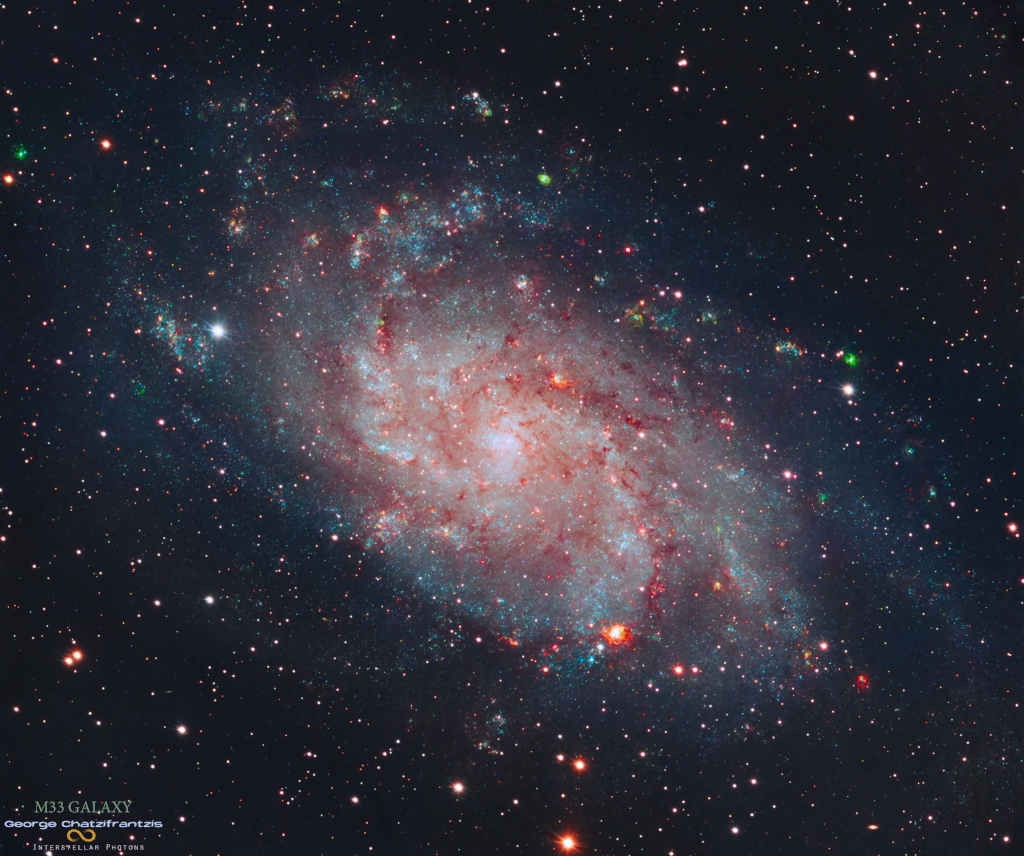
Astronomers are getting a stunning new look at the Triangulum Galaxy (M33), a magnificent spiral galaxy over 50,000 light-years wide. This cosmic neighbor, just 3 million light-years away, is the third-largest in our local galactic neighborhood and acts as a crucial tool for measuring the vast distances across the universe.
The Full Story
Key Takeaways
- 1 The Triangulum Galaxy (M33) is a beautiful face-on spiral, one of our closest galactic neighbors.
- 2 It's the third-largest galaxy in our 'Local Group,' after the Milky Way and Andromeda.
- 3 Astronomers use specific 'variable stars' within M33 as a 'cosmic yardstick' to measure vast distances across the universe.
- 4 Telescopic images reveal its vibrant blue star clusters and pink star-forming regions, like the massive NGC 604.
- 5 Studying M33 helps us understand how galaxies form, evolve, and how vast our universe truly is.
💡 Think of it this way:
Think of it like using a well-known landmark, say a famous mountain whose height is precisely known, to calibrate your binoculars to measure the distance to other, unknown mountains far away. Triangulum is that 'landmark' in space, helping us gauge the scale of the universe.
How We Know This
Scientists use powerful telescopes to capture detailed images of galaxies like Triangulum, revealing their intricate structures and dynamic regions. A key technique involves observing special 'variable stars' within the galaxy. These stars brighten and dim in a predictable way, acting like cosmic lighthouses. By carefully measuring how quickly their brightness changes, astronomers can determine their actual intrinsic brightness. Comparing this 'true' brightness to how bright they appear from Earth allows scientists to precisely calculate their distance, turning M33 into a vital cosmic measuring tape.
What This Means
Continued study of the Triangulum Galaxy will refine our understanding of galactic evolution and the complex interactions within our Local Group, especially its relationship with the Andromeda Galaxy. More importantly, by providing a precise anchor for the cosmic distance scale, observations of M33 directly contribute to more accurate measurements of the universe's expansion rate and its overall age. Every new detail helps us piece together the grand cosmic story, from star birth to the fate of the entire universe.
Why It Matters
Understanding galaxies like Triangulum helps us map out our cosmic neighborhood and better grasp the immense scale of the universe. By using it as a 'cosmic yardstick,' scientists can measure distances to even more remote galaxies, unraveling the universe's true size and history.