Back to Articles Image Of The Day

You Are Stardust: Tracing the Cosmic Origins of Your Body's Elements

📖 3 min read 📊 beginner 🏷️ NASA APOD

In Brief

Did you know that every atom in your body has a cosmic origin story? From the Big Bang to exploding stars, the elements that make up your very being have traveled across the universe to create you.
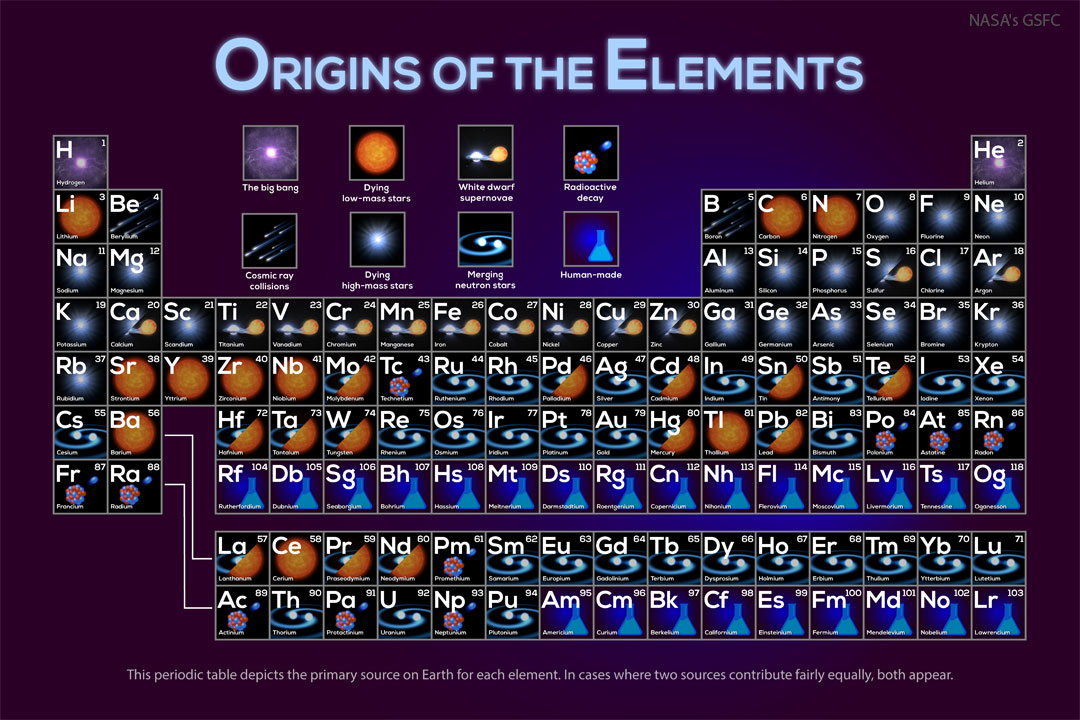
You Are Stardust: Tracing the Cosmic Origins of Your Body's Elements

The Full Story

Every single thing you see around you, and every cell in your body, is made of tiny building blocks called elements. But where did these elements come from? The incredible truth is that they all have a dramatic cosmic origin story, forged in the fiery heart of the universe itself. You are, quite literally, made of stardust. Let's start at the very beginning, with the Big Bang. In the first few minutes after this colossal event, the universe was incredibly hot and dense, like an immense pressure cooker. During this time, the lightest element, hydrogen, was formed. Hydrogen is the most abundant element in the cosmos, and it makes up a significant portion of your body, especially in water. It's truly a primordial ingredient, a direct relic from the universe's birth, with no other significant source in the vast stretches of space. As the universe cooled and expanded, hydrogen gas began to clump together under gravity, forming the first stars. These stars acted like giant cosmic furnaces, igniting nuclear fusion in their cores. This is where the magic really happened! Through fusion, lighter elements like hydrogen were pressed together to form heavier ones. The carbon that forms the backbone of all life, and the oxygen you breathe and that makes up most of the water in your body, were all painstakingly crafted within the fiery hearts of stars, enriching the universe with the very building blocks of life. But what about the even heavier elements? The story gets even more dramatic. Much of the iron in your blood, crucial for carrying oxygen, was forged in the explosive death throes of massive stars – events we call supernovas. These spectacular blasts scatter newly created elements across the galaxy, seeding new generations of stars and planets. And for the truly precious stuff, like the gold in your jewelry, the story is even more violent. Scientists believe gold is primarily created when two incredibly dense objects called neutron stars violently collide, a cataclysmic event so powerful it can ripple spacetime (gravitational waves) and flash across the universe as a short-duration gamma-ray burst. While we have a good understanding of where most elements come from, the cosmic origins of some essential ingredients, like the small amounts of phosphorus and copper vital for our bodies, are still active areas of research. These elements are found in small, but crucial, quantities within us. Scientists are constantly refining their theories and conducting new observations using powerful telescopes and complex computer simulations to precisely map out the cosmic journeys of *all* elements, connecting them to specific stellar events. This incredible journey of elements, from the Big Bang to your own cells, highlights our profound connection to the universe. Every breath you take, every thought you think, is powered by atoms that have traversed billions of years and unimaginable distances. We aren't just living *in* the universe; we are an integral, interconnected part of its grand, ongoing story. The quest to understand where every element comes from is a quest to understand ourselves and our place in the cosmos.

Key Takeaways

  • 1 Hydrogen, the most abundant element, originated during the Big Bang.
  • 2 Carbon and oxygen, essential for life, were forged through nuclear fusion in the cores of stars.
  • 3 Much of the iron in our bodies was created in the powerful explosions of supernovas.
  • 4 Very heavy elements like gold are believed to be formed during violent collisions of neutron stars.
  • 5 The precise cosmic origins of some crucial elements, such as copper and phosphorus, are still active areas of scientific research.

💡 Think of it this way:

Think of it like a cosmic recipe book, where the ingredients (elements) were cooked in different 'kitchens' (the Big Bang, stars, supernovas) across the universe before coming together to make us.

How We Know This

Scientists piece together this cosmic history by studying the light emitted by distant stars and galaxies, which tells them what elements are present. They observe powerful stellar events like supernovas and neutron star collisions using telescopes that detect various forms of radiation, including visible light, X-rays, gamma rays, and even gravitational waves. Additionally, complex computer simulations help them model the extreme conditions inside stars and during cosmic explosions to understand how elements are formed.

What This Means

This understanding helps us complete the cosmic "recipe book" for the universe, showing how all the ingredients for planets, life, and everything we see came to be. It deepens our knowledge of stellar evolution, galactic chemistry, and the very processes that make life possible. Future research will continue to pinpoint the origins of remaining mystery elements and refine our models, providing an even more complete picture of the universe's intricate elemental tapestry.

Why It Matters

Understanding where these elements come from connects us directly to the universe's grand narrative, showing how we are literally made of stardust and the products of cosmic evolution, giving us a deeper sense of belonging in the cosmos.

Related Topics

#Cosmic Origins #Elements #Stardust #Astrophysics #Big Bang