Back to Articles Image Of The Day

Cosmic Ghost: Unveiling Humanity's First Recorded Supernova Aftermath

πŸ“– 3 min read πŸ“Š beginner 🏷️ NASA APOD

In Brief

Over 1,800 years ago, ancient Chinese astronomers witnessed a 'new star' blaze in the sky – the earliest recorded supernova. Today, powerful telescopes reveal RCW 86, the beautiful, expanding cloud of gas left behind by that colossal stellar explosion. This cosmic ghost helps us understand how stars dramatically end their lives, connecting ancient human observations to cutting-edge science.
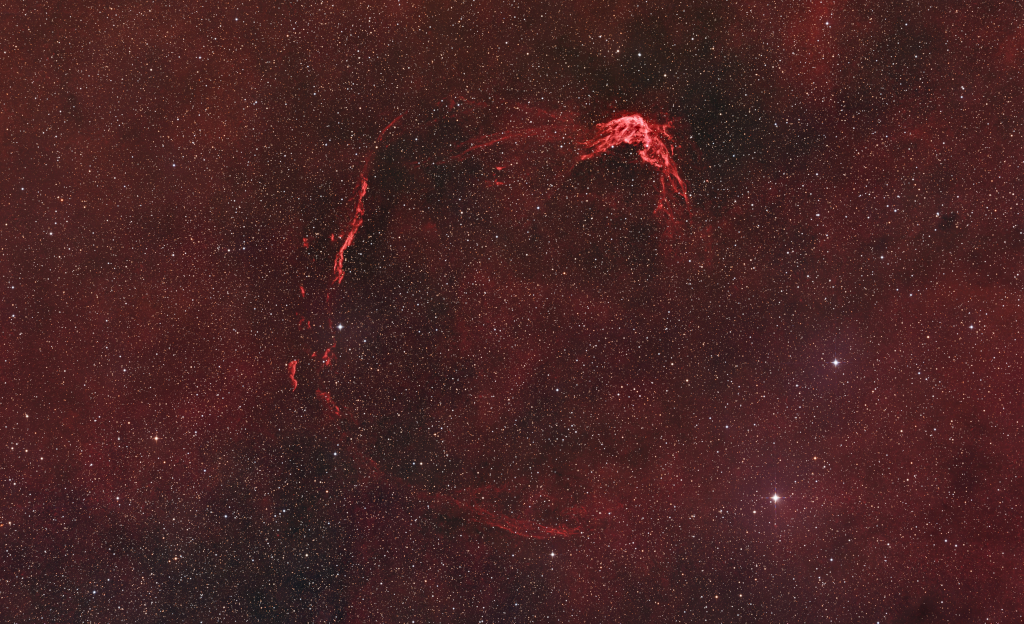
Cosmic Ghost: Unveiling Humanity's First Recorded Supernova Aftermath

The Full Story

Imagine looking up at the night sky over 1,800 years ago, around 185 AD. Suddenly, a bright new star appears where none was before! This wasn't a fleeting meteor, but an object so luminous it stayed visible to the naked eye for months. Ancient Chinese astronomers meticulously recorded this 'guest star' in the southern constellation Centaurus, providing humanity with its very first documented supernova – the explosive death of a massive star. Today, this historical record gives us a unique window into a profound cosmic event, helping modern astronomers pinpoint its ethereal remnants. Fast forward to the 21st century, and powerful telescopes like those used by NASA have captured breathtaking images of what’s left of that ancient blast. We now know it as RCW 86, a vast, wispy emission nebula that looks like a tattered, glowing cloud against the starry backdrop. This isn't the star itself, but a 'supernova remnant' – the superheated, expanding bubble of gas and dust created by the star's explosion. Though it spans an enormous 100 light-years across and appears larger than the full moon in our sky, it's so faint now that you need advanced telescopes to see its ghostly outlines, even from 8,000 light-years away. Supernovas come in different flavors, each telling a different story about a star's final moments. RCW 86 is identified as a Type Ia supernova, which is a particularly fascinating kind of stellar death. Unlike the dramatic collapse of a single, giant star, a Type Ia supernova involves a white dwarf – the dense, leftover core of a star like our Sun. But this white dwarf isn't alone; it's part of a binary system, orbiting another companion star. In a cosmic act of 'cannibalism,' the white dwarf slowly siphons material off its companion. As the white dwarf gorges on its companion's gas, it grows heavier and heavier. Once it crosses a critical mass limit (about 1.4 times the mass of our Sun), it can no longer support its own weight. This triggers a runaway thermonuclear reaction – essentially, the entire white dwarf star detonates in a cataclysmic explosion. Evidence from RCW 86, such as an abundance of the element iron (a key product of these specific explosions) and the *absence* of a neutron star or pulsar (which would be left behind by a different type of supernova), strongly points to this fiery Type Ia scenario. Studying RCW 86 isn't just about admiring beautiful cosmic artwork; it's about understanding the very fabric of our universe. Type Ia supernovae are incredibly important 'standard candles' in astronomy – they always explode with roughly the same peak brightness, making them crucial tools for measuring vast cosmic distances and even tracking the expansion of the universe. This ancient star's death, first noted by curious humans 1,800 years ago, continues to teach us profound lessons about stellar life cycles, the creation of elements, and the grand, evolving story of the cosmos.

Key Takeaways

  • 1 RCW 86 is the remnant of the first recorded supernova by humans, observed in 185 AD.
  • 2 It originated from a 'Type Ia' supernova, which occurs when a white dwarf star in a binary system explodes.
  • 3 Scientists deduced it was a Type Ia supernova due to the abundance of iron and the lack of a neutron star or pulsar within the remnant.
  • 4 The remnant is a vast cloud of gas, about 100 light-years across, still expanding from the explosion 8,000 light-years away.
  • 5 Understanding Type Ia supernovae is crucial for measuring cosmic distances and studying the universe's expansion.

πŸ’‘ Think of it this way:

Imagine finding the faint, swirling smoke plume from a massive bonfire that burned 1,800 years ago. The fire itself is long gone, but its lingering trace tells us a dramatic story about what happened in that spot so long ago.

How We Know This

Astronomers observed RCW 86 using powerful modern telescopes, both on Earth and in space. These telescopes collect various forms of light and radiation from the faint nebula. By analyzing this data, they create detailed images, identify the types of elements present (like iron), and look for the presence or absence of specific compact objects (like neutron stars), which helps them determine the nature of the original stellar explosion.

What This Means

Further study of RCW 86 will continue to refine our models of Type Ia supernovae, which are fundamental to understanding stellar evolution and measuring the universe's expansion. These explosions also play a crucial role in enriching the galaxy with heavier elements, seeding new generations of stars and planets – including our own. Understanding these cosmic events helps us trace the origins of the materials that make up everything around us, and ourselves.

Why It Matters

This discovery bridges millennia of human curiosity, showing how an event observed by our ancestors is now studied with advanced technology. It helps us understand the incredible power of stellar deaths, how elements crucial for life are forged, and how scientists piece together the universe's history.

Related Topics

#Supernova #Stellar Evolution #Astrophysics #Ancient Astronomy #RCW 86