Mars Rover Finds Giant 'Turtle Rock' – But It's No Creature!
In Brief
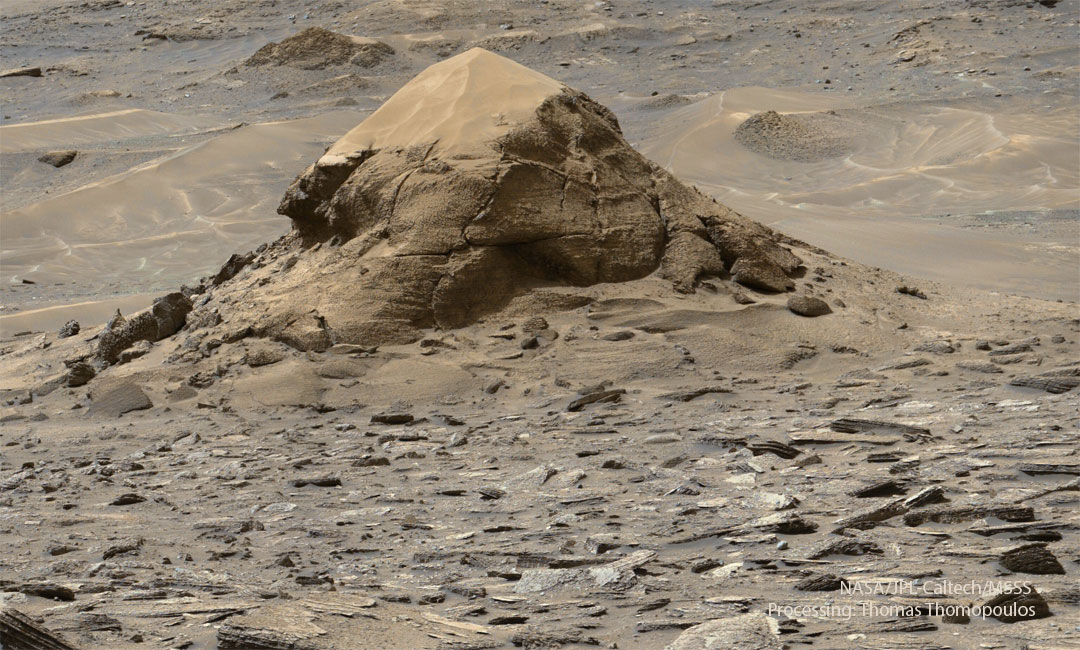
NASA's Curiosity rover has stumbled upon a massive, turtle-shaped rock formation on Mars. While it looks remarkably like a giant tortoise, it's actually a natural geological wonder, not an ancient Martian fossil.
The Full Story
Key Takeaways
- 1 NASA's Curiosity rover discovered a 15-meter 'Turtle Rock' on Mars.
- 2 It's a natural geological formation, not a fossil, shaped by wind erosion and ancient water.
- 3 Its layered structure provides crucial insights into Mars's past climate and geological history.
💡 Think of it this way:
Imagine finding a majestic sandcastle on a beach that's been slowly carved and sculpted by the wind and waves for thousands of years. That's a bit like what Curiosity discovered – a natural masterpiece telling a very old story!
How We Know This
The discovery was made by NASA's Curiosity rover, a robotic explorer equipped with cameras and scientific instruments. As it navigates the Martian surface, Curiosity takes high-resolution images and uses its onboard labs to analyze rocks and soil, acting like a remote-controlled geologist revealing the planet's secrets.
What This Means
Studying formations like 'Turtle Rock' helps scientists reconstruct Mars's environmental timeline, revealing periods when water or specific atmospheric conditions were present. This information is critical for assessing the planet's past habitability, understanding planetary evolution, and guiding future missions, including potential human exploration, to areas most likely to hold signs of ancient life.
Why It Matters
This discovery helps scientists unravel Mars's ancient past, showing us how wind and water shaped its landscape over billions of years. It's like finding a natural history book etched in stone, giving us clues about how planets evolve and if life could have ever thrived there.