Back to Articles Image Of The Day

Catch Comet Tempel 2: A Glimpse of an Ancient Cosmic Dust Trail

📖 3 min read 📊 beginner 🏷️ NASA APOD

In Brief

Get ready to spot Comet Tempel 2, a celestial traveler currently putting on a unique show in our night sky. Instead of a temporary tail, this periodic comet is sporting a never-before-seen 'dust trail' — a ribbon of ancient cosmic dust left behind from countless orbits. Earth is even set to cross through this historic trail, potentially making it glow brighter just before the comet's closest approach.
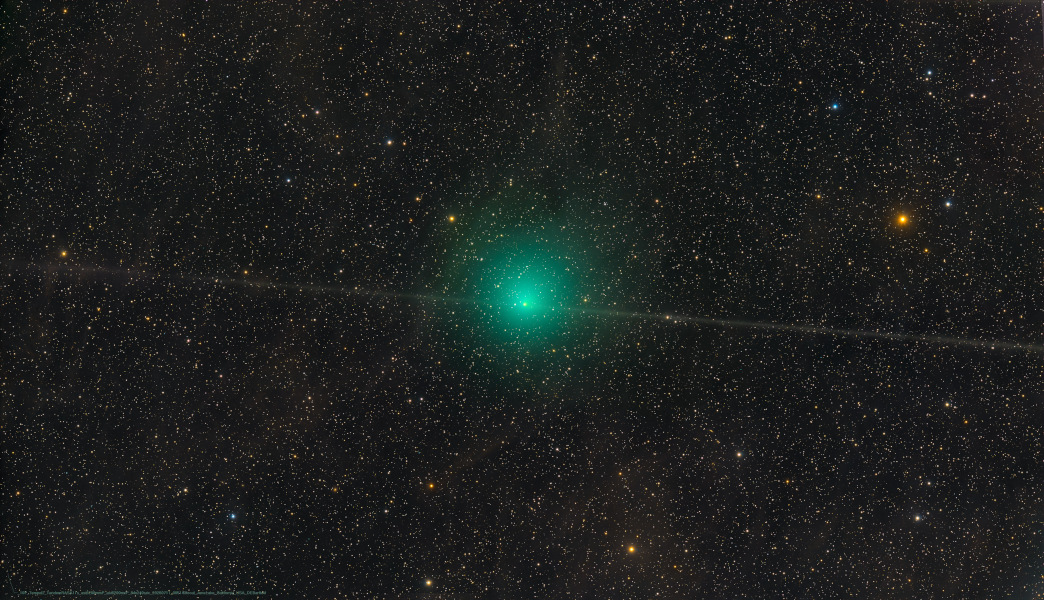
Catch Comet Tempel 2: A Glimpse of an Ancient Cosmic Dust Trail

The Full Story

Comet 10P/Tempel 2, a regular visitor to our inner solar system, completes an orbit around the Sun every 5.4 years. This icy traveler is currently putting on a splendid display, visible through binoculars or small telescopes in the direction of the constellation Capricornus. A recent image captured on July 11 beautifully showcases its bright core, or 'nucleus,' surrounded by a lovely greenish cloud of gas and dust known as the 'coma.' What truly sets this comet apart is a remarkable feature extending both east and west of its nucleus: a thin, ethereal 'dust trail.' Unlike the more familiar comet 'dust tail,' which typically fans out temporarily away from the Sun due to the pressure of sunlight and solar wind, this trail is something entirely different. It's a long-standing accumulation of tiny dust particles shed over many, many past orbits, essentially marking the comet's ancient highway through space. This isn't just a pretty sight; it's a cosmic archaeological record. A typical dust tail shows us what a comet is doing right now, but this enduring dust trail provides clues about its long-term activity and how it has evolved over eons. It acts like a breadcrumb trail, revealing how much material this ancient periodic comet has lost and where it has traveled throughout its history, contributing to the general sprinkle of cosmic dust found across our solar system. The excitement isn't over yet! On July 20, Earth is scheduled to cross directly through the orbital plane of Comet Tempel 2. When we look at the dust trail from this unique perspective, it might appear to narrow and brighten, similar to how a flat sheet of paper looks much thinner and sharper when viewed edge-on. Following this, the comet will reach its closest point to the Sun (perihelion) on August 2, and then make its closest approach to Earth on August 3, offering prime viewing opportunities. Observing such ancient dust trails helps astronomers understand the life cycle of comets – how they gradually lose material, and how this material disperses to become part of the larger cosmic environment. It deepens our understanding of the early solar system's building blocks and the continuous subtle changes occurring in space. So, if you have a pair of binoculars or a small telescope, now is the perfect time to gaze toward Capricornus and witness a piece of cosmic history in the making.

Key Takeaways

  • 1 Comet Tempel 2 features a rare, long-lasting 'dust trail' made of ancient debris, distinct from a typical temporary comet tail.
  • 2 This trail offers scientists a unique 'cosmic record' of the comet's history and its contribution of material to the solar system over many orbits.
  • 3 Earth will soon pass through the comet's orbital plane, potentially making the trail appear brighter, before Tempel 2 makes its closest approach to Earth.

💡 Think of it this way:

Imagine a very active snail leaving an incredibly faint, shimmering slime trail that doesn't just disappear, but builds up over hundreds of journeys. Comet Tempel 2's dust trail is like that, a shimmering ribbon of accumulated debris tracing its ancient path around the Sun, rather than just a temporary puff of smoke.

How We Know This

Astronomers captured this striking image using powerful telescopic cameras, which are essentially advanced digital eyes that can peer across vast distances in space. By collecting faint light over time, these instruments allow scientists to detect subtle features like the tenuous dust trail, revealing details invisible to the naked eye.

What This Means

Understanding these ancient dust trails helps us piece together the long-term evolution of comets and how they slowly shed material, enriching the solar system with cosmic dust. This research provides valuable insights into the dynamic processes shaping our celestial neighborhood and the origins of the materials found throughout space.

Why It Matters

This unique dust trail offers scientists a rare look into a comet's long-term history and how these icy wanderers seed our solar system with ancient material. For curious stargazers, it's an exceptional opportunity to witness a 'living fossil' of the solar system, visible even with small telescopes.

Related Topics

#Comet Tempel 2 #Astronomy #Dust Trail #Solar System #Space Observation