Back to Articles Image Of The Day

Cosmic Ripples: Unveiling the Mystery of Galaxy NGC 474's Strange Shells

📖 3 min read 📊 beginner 🏷️ NASA APOD

In Brief

Galaxy NGC 474, usually seen as a smooth elliptical galaxy, has surprised astronomers with strange, shimmering shells of stars. Scientists are debating if these cosmic ripples are the leftover debris from ancient galactic meals or the result of a recent, dramatic collision with a neighboring galaxy.
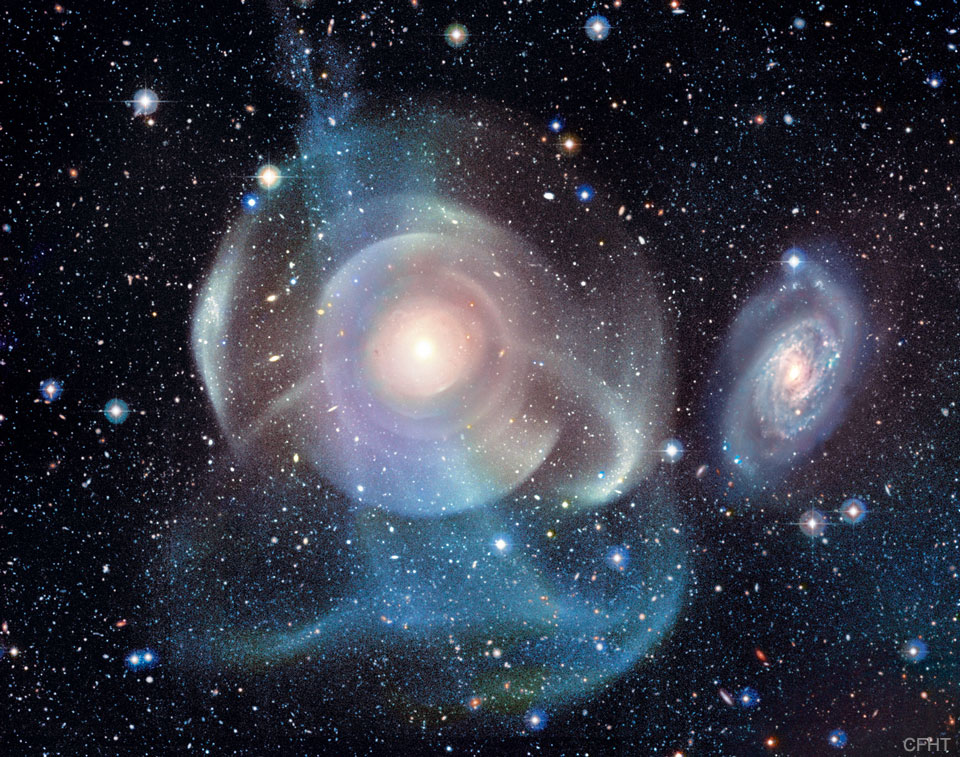
Cosmic Ripples: Unveiling the Mystery of Galaxy NGC 474's Strange Shells

The Full Story

When we look at elliptical galaxies, they often appear as smooth, featureless cosmic eggs, a calm contrast to the swirling arms of spiral galaxies like our Milky Way. But deeper observations of NGC 474, a galaxy 100 million light-years away in the constellation Pisces, have revealed a surprising secret: it's adorned with multiple, faint layers of shell-like structures, like delicate, concentric ripples spreading through space. This unexpected complexity challenges our simple understanding of these galactic giants. What could be causing these spectacular shells? One leading theory suggests they are 'tidal tails' – cosmic crumbs left over from NGC 474's past meals. Over billions of years, larger galaxies like NGC 474 often 'cannibalize' smaller, less massive galaxies that venture too close. When a small galaxy is gobbled up, its stars and gas are torn apart by the larger galaxy's immense gravity, stretching into long streams that eventually settle into these shell-like patterns. This process could have happened repeatedly over the last billion years, building up the intricate layers we see today. Another fascinating possibility is that these shells are more akin to ripples in a pond, created by a much more recent and dramatic event. NGC 474 isn't alone; a spiral galaxy is situated just to its right. Scientists propose that an ongoing or recent collision with this neighboring galaxy could be sending powerful 'density waves' — like cosmic shockwaves — rippling through the vast body of NGC 474. These waves would compress stars and gas in certain regions, creating the bright, shell-like features we observe, similar to how a stone dropped into water creates expanding circles. Regardless of which theory proves true, the discovery of these complex shells around NGC 474 dramatically highlights a growing realization in astronomy: the halos of many elliptical galaxies, once thought to be relatively simple, are far more dynamic and chaotic than previously imagined. This isn't just a story about a distant galaxy; it has implications for our own galactic home. The halo of our Milky Way Galaxy, too, is now understood to be surprisingly intricate, with its own streams of stars that hint at ancient mergers and ongoing cosmic interactions. Spanning a colossal 250,000 light-years, NGC 474 is a true galactic behemoth. Observing these faint structures requires extremely sensitive telescopes capable of capturing the most diffuse light across vast cosmic distances. This ongoing mystery of NGC 474's shells pushes astronomers to develop better models of galaxy evolution, prompting further investigation into how gravitational forces shape the universe's grandest structures and how common these 'ripples' might be in the cosmos.

Key Takeaways

  • 1 Galaxy NGC 474 displays surprising shell structures, challenging our view of elliptical galaxies.
  • 2 The shells could be debris from absorbed smaller galaxies (galactic cannibalism).
  • 3 Alternatively, they might be ripples from a collision with a nearby spiral galaxy.
  • 4 This discovery shows that galactic halos, including our Milky Way's, are more complex than once thought.

💡 Think of it this way:

Imagine throwing a stone into a still pond and watching the ripples spread outwards – these mysterious shells could be similar cosmic ripples from a gigantic impact. Alternatively, think of them like crumbs left behind after a giant cosmic meal where NGC 474 'ate' smaller galaxies.

How We Know This

Astronomers used powerful telescopes and specialized imaging techniques to peer deeply into space, capturing the faint light from NGC 474's distant and diffuse shell structures. These 'deep images' reveal details that are invisible in standard, less sensitive observations, much like using a powerful camera to see faint stars in a dark sky that are hidden to the naked eye.

What This Means

Understanding the origin of NGC 474's shells is crucial for refining our models of how galaxies form, grow, and interact over billions of years. Future observations, possibly with even more advanced telescopes, will aim to gather more clues, helping scientists determine which theory best explains these cosmic ripples and what it means for the evolution of galaxies across the universe, including our own.

Why It Matters

This discovery changes our understanding of how galaxies, including our own Milky Way, grow and evolve, revealing a much more dynamic and complex universe than we often imagine.

Related Topics

#Galaxy #NGC 474 #Astronomy #Galactic Evolution #Space Mystery