The Milky Way's Secret Window: Peeking at Distant Stars
In Brief
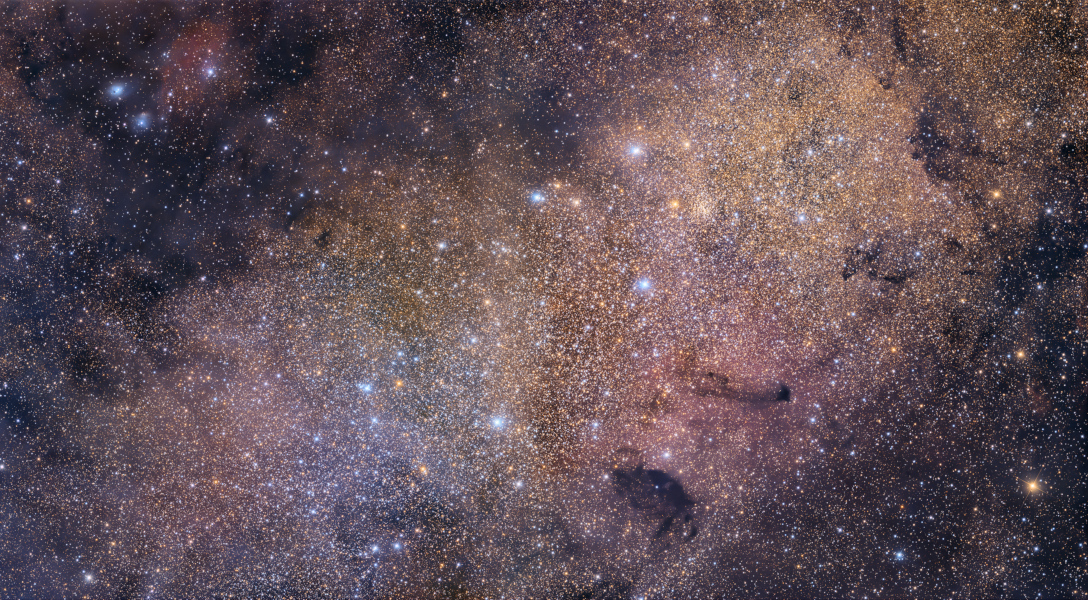
Astronomers have identified a unique cosmic feature, Messier 24, which isn't a star cluster or nebula, but a vast opening in nearby space. This incredible "window" allows us to peer through clouds of interstellar dust and gaze upon stars deep within our galaxy's Sagittarius arm, some 10,000 light-years away.
The Full Story
Key Takeaways
- 1 Messier 24 is a unique 'cosmic window,' not a traditional star cluster or nebula.
- 2 It's a gap in nearby interstellar dust clouds, allowing a clear view of stars 10,000+ light-years away in the Milky Way's Sagittarius arm.
- 3 Observing through M24 helps scientists map our galaxy's structure and understand the effects of interstellar dust.
💡 Think of it this way:
Imagine a foggy night where suddenly a gust of wind clears a perfect hole, letting you see the city lights far beyond. Messier 24 is like that cosmic clearing, letting us see deep into our galaxy.
How We Know This
Astronomers utilized optical telescopes and binoculars to observe the Messier 24 region. By analyzing the apparent density and distribution of stars, and comparing it with surrounding areas known to be obscured by dust, they concluded that M24 itself is not a compact object but rather a vast, clear opening through which much more distant stars become visible.
What This Means
Understanding features like M24 is crucial for mapping the full extent and intricate structure of our Milky Way. It helps scientists calibrate how much interstellar dust affects our observations and provides unique 'unobstructed' views for studying distant star populations and their evolution, giving us a clearer picture of our galactic home.
Why It Matters
This discovery helps us understand the intricate structure of our own Milky Way galaxy, revealing how interstellar dust shapes our view of the cosmos and offering a rare glimpse into truly distant stellar neighborhoods.