Cosmic Dance: Three Galaxies Headed for a Grand Collision
In Brief
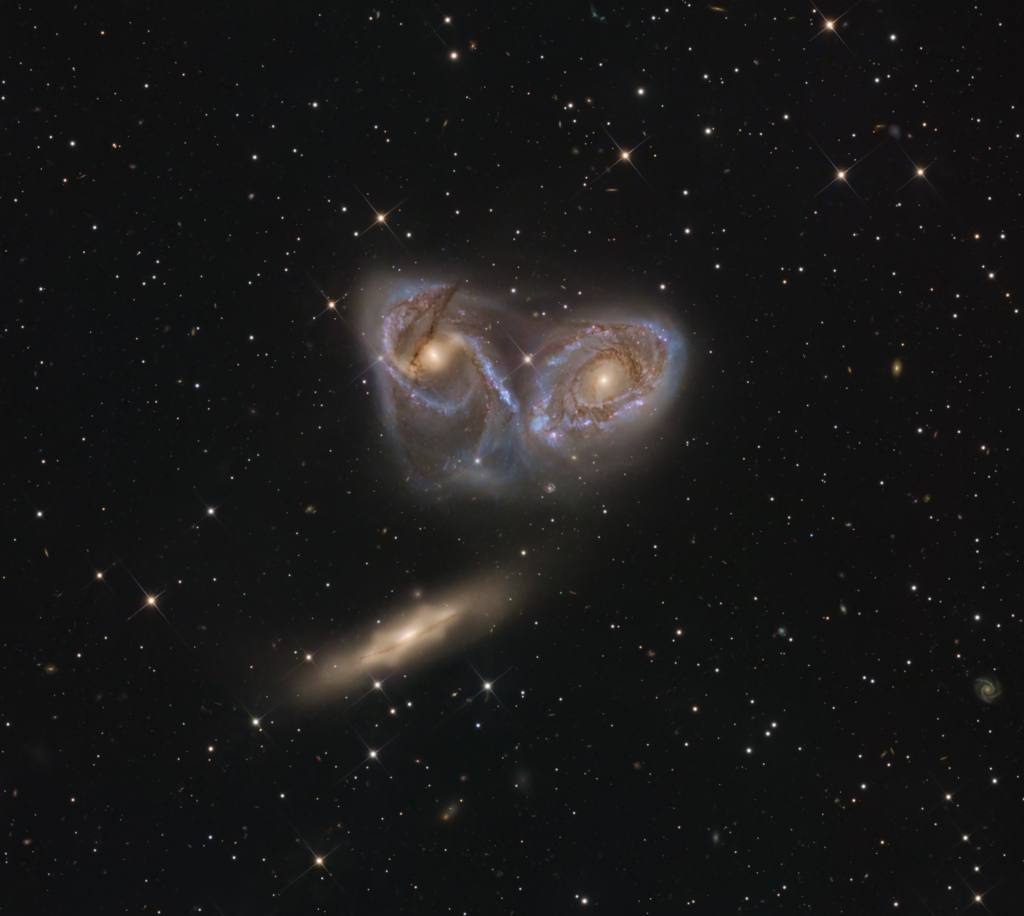
About 190 million light-years away, three magnificent spiral galaxies are locked in a gravitational dance, slowly pulling each other closer. This cosmic ballet is already distorting their shapes, sparking new star birth, and promises an inevitable grand merger into a single, colossal galaxy.
The Full Story
Key Takeaways
- 1 Three distant galaxies are currently in a gravitational 'dance' leading to an inevitable merger.
- 2 Gravitational interactions are distorting the galaxies' shapes and triggering intense star formation.
- 3 Observing these interactions helps us understand how galaxies evolve and form larger structures, including the future of our own Milky Way.
💡 Think of it this way:
Imagine three giant ships slowly circling each other in the ocean, their individual wakes distorting as they get closer. Eventually, their gravitational pull will bring them together to form one super-ship.
How We Know This
Astronomers use powerful telescopes, like those that captured the image for NASA's APOD (Astronomy Picture of the Day), to peer across vast cosmic distances. By collecting light that has traveled for millions of years, these telescopes allow us to image these faint, distant objects. The 'sharp telescopic frame' mentioned refers to the high-resolution images captured, which reveal intricate details of the galaxies' structures and interactions across a span of over 300 thousand light-years.
What This Means
Understanding these galaxy mergers is crucial for piecing together the cosmic story. It helps us predict the ultimate fate of our own Milky Way, which is destined to merge with the Andromeda galaxy in about 4.5 billion years. These observations also provide vital clues about how the largest galaxies in the universe were formed, by repeatedly absorbing smaller galaxies. Future studies will likely focus on mapping the precise movements and star-forming regions within such systems to refine our models of galaxy evolution.
Why It Matters
This discovery offers a breathtaking glimpse into the future of our own galaxy, the Milky Way, which is also on a collision course with the Andromeda galaxy. By observing these distant interacting galaxies, we learn how galactic mergers shape the universe and create the enormous galaxies we see today.