Asteroid Itokawa: Solving the Mystery of its Smooth, Craterless Surface
In Brief
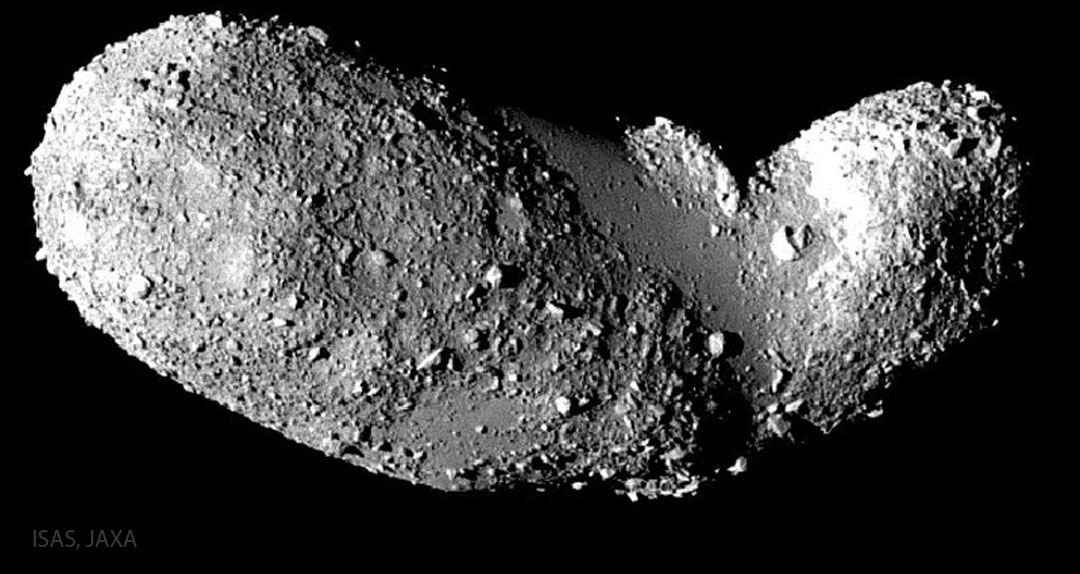
Scientists are unraveling the puzzle of why parts of asteroid Itokawa are surprisingly smooth and lack craters. It turns out this asteroid isn't a solid rock but a loose pile of rubble, and internal jostling, much like the 'Brazil nut effect,' is likely to blame. Samples returned to Earth by the Hayabusa spacecraft are offering unprecedented clues about this unique space rock and the early history of our Solar System.
The Full Story
Key Takeaways
- 1 Asteroid Itokawa features unusually smooth, craterless sections due to its unique 'rubble pile' structure.
- 2 Scientists attribute the smooth areas to internal jostling within the asteroid, similar to the 'Brazil nut effect,' which causes finer materials to rise to the surface.
- 3 The Hayabusa spacecraft landed on a smooth patch, collected samples, and returned them to Earth for study.
- 4 Analysis of these samples provides vital insights into Itokawa's history and the early formation of our Solar System.
💡 Think of it this way:
Imagine shaking a bag of mixed nuts: the biggest ones (like Brazil nuts) often rise to the top, while the smaller ones settle below. On asteroid Itokawa, a similar 'Brazil nut effect' is happening, where internal vibrations cause larger rocks to migrate inwards and smaller, dustier material to create smooth patches on the surface.
How We Know This
The Japanese Hayabusa spacecraft conducted a detailed reconnaissance of asteroid Itokawa in 2005, capturing high-resolution images that revealed its unusual surface features. It then performed a precise touchdown to collect tiny dust and rock samples, which were remarkably returned to Earth for in-depth analysis. Computer simulations were also used to model the asteroid's internal dynamics and predict its long-term orbital path.
What This Means
Studying rubble-pile asteroids like Itokawa is fundamental for understanding the building blocks of planets and the conditions of the early Solar System. The knowledge gained from these missions is also crucial for developing potential strategies to monitor and, if necessary, mitigate the threat of hazardous asteroids that could one day impact Earth.
Why It Matters
Understanding 'rubble pile' asteroids like Itokawa helps us learn about how planets form and how our Solar System evolved. It also provides vital data for developing strategies to potentially deflect hazardous asteroids, should one ever pose a threat to Earth in the distant future.