NASA's Perseverance Rover Completes a Martian Marathon!
In Brief
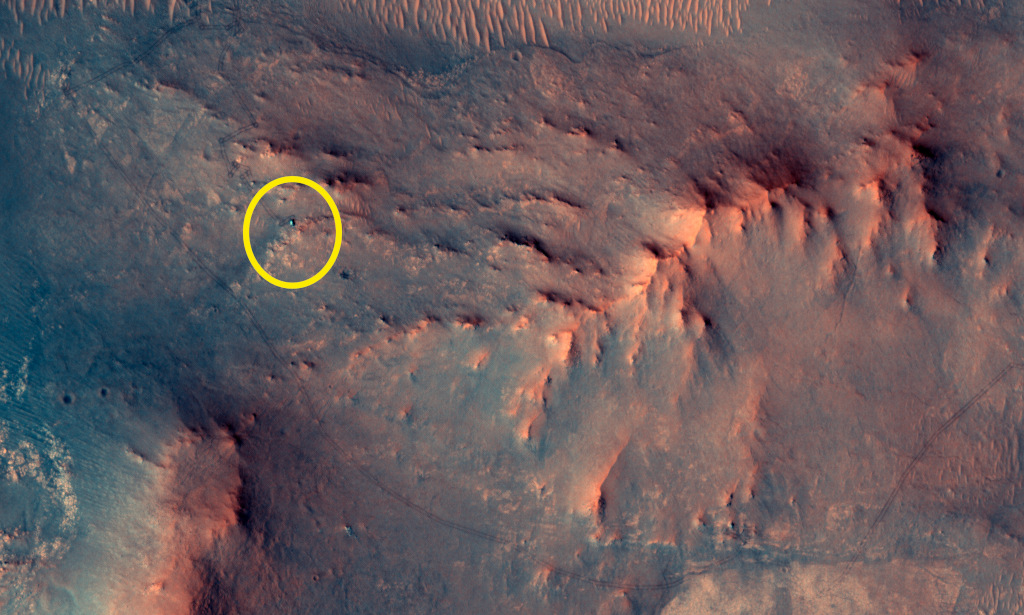
NASA's Perseverance rover has just finished driving the equivalent of a marathon on Mars, clocking over 26 miles across the alien landscape. This incredible achievement was even captured from orbit by another spacecraft, showcasing the rover's endurance as it hunts for signs of ancient life.
The Full Story
Key Takeaways
- 1 NASA's Perseverance rover drove a marathon distance (26.2 miles) on Mars.
- 2 The rover was photographed from orbit by the HiRISE camera on the Mars Reconnaissance Orbiter.
- 3 Perseverance is exploring Jezero Crater, a former lake and river delta, for signs of ancient microbial life.
- 4 The marathon achievement took over 5 Earth years of driving since its landing.
💡 Think of it this way:
Imagine driving your car across a vast, dusty desert for over five years straight, covering the distance of a full marathon, all while you're being watched from a satellite hundreds of miles above!
How We Know This
The rover itself keeps track of its movements using advanced navigation systems, similar to a car's odometer. To visually confirm its location and progress, NASA uses the HiRISE camera aboard the Mars Reconnaissance Orbiter. This camera is like an incredibly powerful telescope orbiting Mars, capable of taking super-sharp images that can resolve details as small as a kitchen table, even spotting a car-sized rover and its tracks from hundreds of miles away in space.
What This Means
This remarkable endurance demonstrates the incredible capability of robotic explorers to operate for extended periods in harsh alien environments, paving the way for even more ambitious future missions. Perseverance's continued exploration, especially its hunt for biosignatures and collection of Martian samples, holds the potential to revolutionize our understanding of life beyond Earth and could provide the first definitive evidence of ancient Martian life. The lessons learned from its marathon journey will also be invaluable for planning future human expeditions to the Red Planet.
Why It Matters
This milestone demonstrates humanity's incredible capability to explore distant worlds and push the boundaries of robotic exploration. It brings us closer to understanding if life ever existed beyond Earth and lays groundwork for future human missions to Mars.