Starry Night Comes to Life: A Modern Photo Echoes Van Gogh's Masterpiece
In Brief
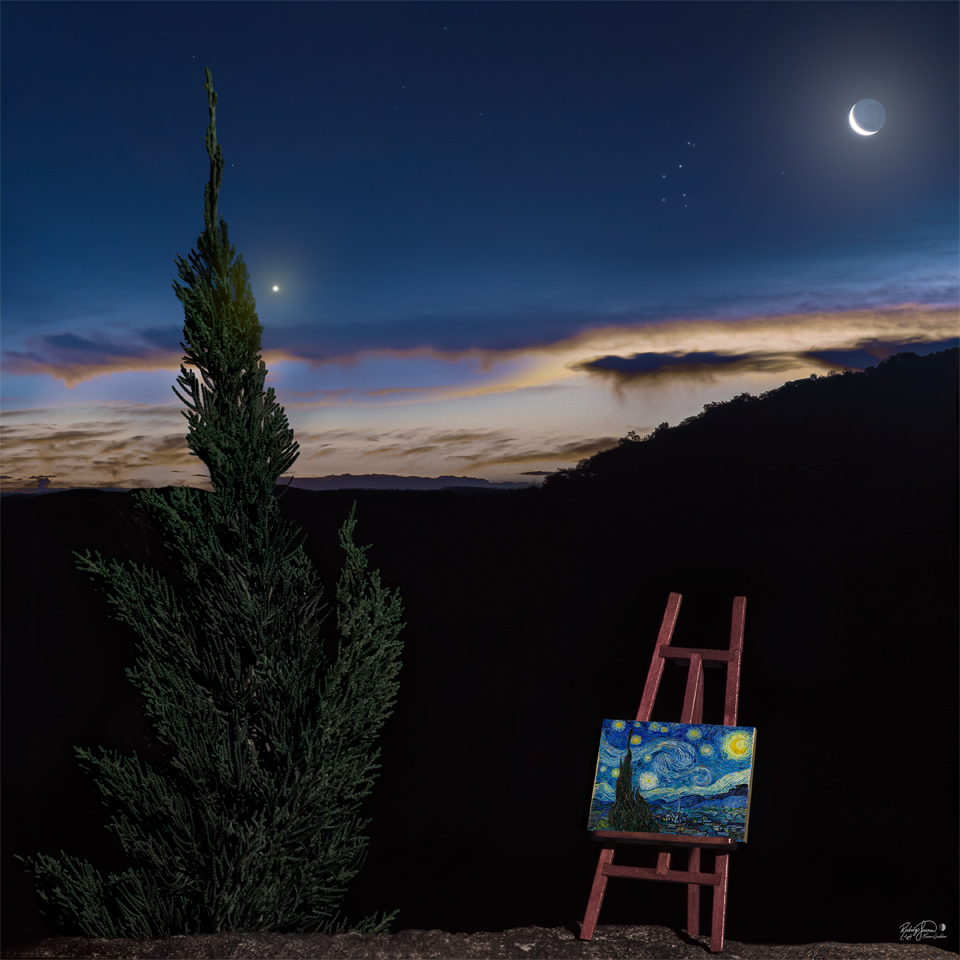
A breathtaking photograph recently taken in Brazil has perfectly recreated the iconic night sky scene from Vincent van Gogh's famous painting, "The Starry Night." This modern "Starry Night II" features an uncanny match of celestial objects and landscape, bringing the beloved artwork into the present day. It's a stunning reminder of the enduring beauty in our night sky, inspiring us to see the cosmos through an artist's lens.
The Full Story
Key Takeaways
- 1 A recent photograph from Brazil perfectly recreates the iconic scene from Van Gogh's "The Starry Night."
- 2 The image showcases an extraordinary alignment of celestial objects like the moon and Venus, matching the painting's composition.
- 3 It highlights the enduring and universal beauty of the night sky, bridging art history with contemporary astronomy.
- 4 This modern 'Starry Night II' offers a real-world echo of a timeless masterpiece, inspiring new appreciation for the cosmos.
💡 Think of it this way:
Imagine finding a photograph that perfectly matches a famous painting you've only ever seen in a museum – from the exact placement of the moon to the trees and hills. That's precisely what this incredible image has achieved, creating a real-world 'twin' of Van Gogh's 'Starry Night'!
How We Know This
This stunning 'Starry Night II' wasn't captured with a complex space telescope but through the meticulous observation and artistic vision of a photographer on Earth. By carefully planning and framing the shot in Cascavel, Brazil, they managed to align the moon, Venus, and Earth's landscape in a way that mirrored Van Gogh's legendary composition. It's a beautiful example of how everyday photography, combined with a keen eye for astronomy, can reveal extraordinary connections and artistic parallels in our universe.
What This Means
This photographic masterpiece reminds us that the universe isn't just a subject for scientific study; it's also an endless source of artistic inspiration and profound beauty. It encourages everyone, regardless of scientific background, to gaze at the night sky with a sense of wonder, seeing the potential for art and connection in every star. Perhaps it will inspire future artists and photographers to find their own 'Starry Nights,' fostering a deeper appreciation for the cosmic canvas above us and reinforcing the timeless bond between humanity and the universe.
Why It Matters
This unique image beautifully bridges the worlds of art and science, showing that the profound beauty Van Gogh immortalized in his masterpiece is still vividly present above us. It encourages everyone to pause, look up, and rediscover the wonders of the night sky, recognizing the universe as a continuous source of inspiration for both artists and stargazers.