Messier 2: A 13-Billion-Year-Old Star City in Our Galaxy
In Brief
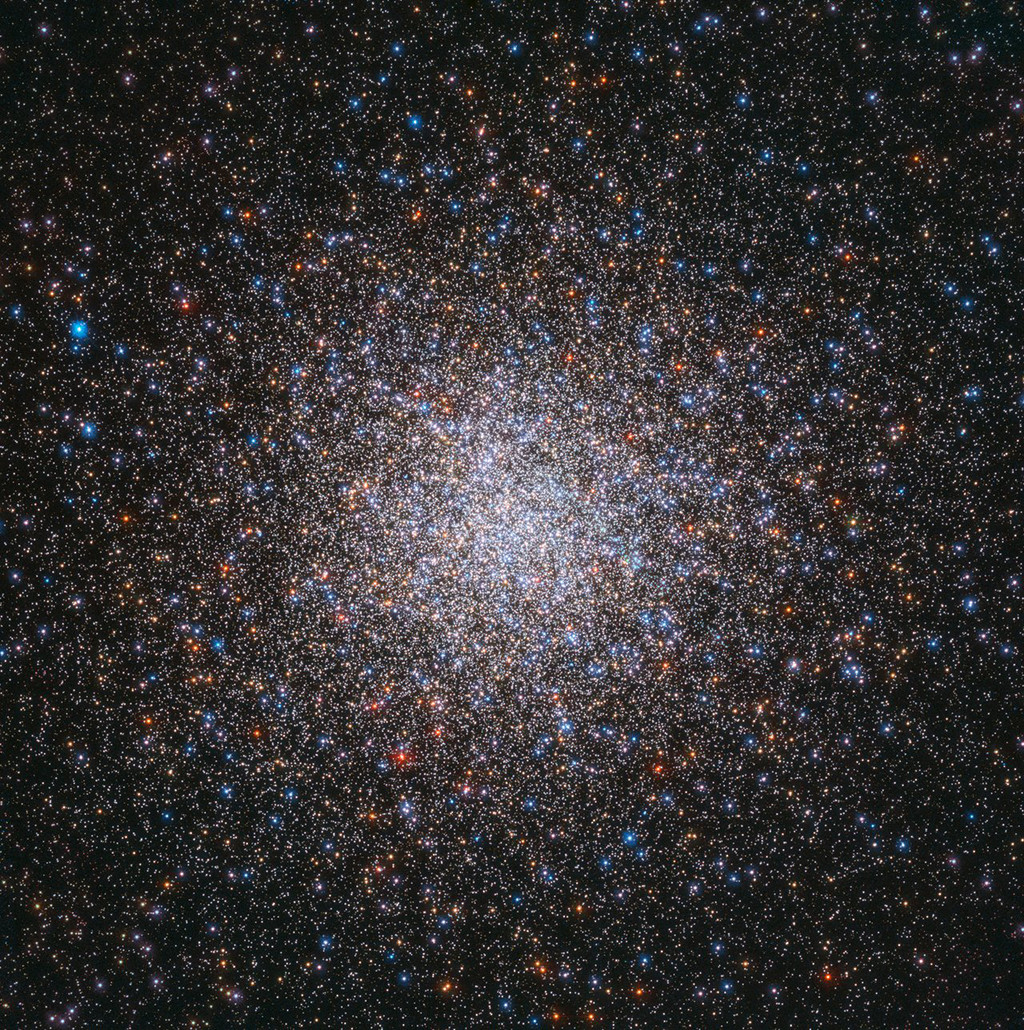
Imagine a bustling city of nearly 150,000 stars, packed tightly together and orbiting our Milky Way. This ancient cosmic cannonball, known as Messier 2, is 13 billion years old and holds clues to our galaxy's distant past. Recent findings even show it's leaving a trail of stellar debris, hinting at a dramatic cosmic encounter.
The Full Story
Key Takeaways
- 1 Messier 2 (M2) is one of the largest and oldest star clusters in our galaxy, aged 13 billion years.
- 2 It contains nearly 150,000 stars, vividly resolved by the Hubble Space Telescope, unlike initial observations.
- 3 Astronomers recently discovered a 'stellar debris stream' trailing M2, indicating past gravitational interactions with the Milky Way.
💡 Think of it this way:
Imagine a tiny, incredibly dense beehive of nearly 150,000 bees, all buzzing together in a super-fast orbit around a giant sunflower. Messier 2 is a bit like that beehive, but made of stars and orbiting our galaxy! And just like a beehive might lose a few bees as it travels, this star cluster is leaving a trail of stars behind.
How We Know This
Initially observed by Charles Messier in the 18th century with basic telescopes, Messier 2 remained a blurry 'nebula.' The stunning details we see today, including individual stars, come from the powerful Hubble Space Telescope, which orbits Earth high above atmospheric distortions. Its advanced cameras capture incredibly sharp images in visible light. The recent discovery of the stellar debris stream likely involved deep imaging from both ground-based and space telescopes, combined with sophisticated data analysis to detect faint, extended structures against the background sky.
What This Means
The discovery of Messier 2's debris stream opens new avenues for research into galactic dynamics and the evolution of star clusters. By modeling these interactions, astronomers can gain insights into the distribution of mysterious dark matter in our galaxy's halo, which subtly influences how these clusters are pulled apart. Future observations, perhaps with even more powerful telescopes like the James Webb Space Telescope, could reveal more about the composition of these stripped stars and further refine our understanding of the universe's most ancient residents.
Why It Matters
Studying Messier 2 helps us understand how galaxies like our own Milky Way were formed and evolved, offering a direct look into the universe's infancy. Its ancient stars and recent 'debris trail' reveal the dynamic, ever-changing nature of our cosmic neighborhood and the forces that shape galaxies.