Back to Articles Image Of The Day

Cosmic Bubble: A Giant Star's Last Hurrah Shapes Space

πŸ“– 3 min read πŸ“Š beginner 🏷️ NASA APOD

In Brief

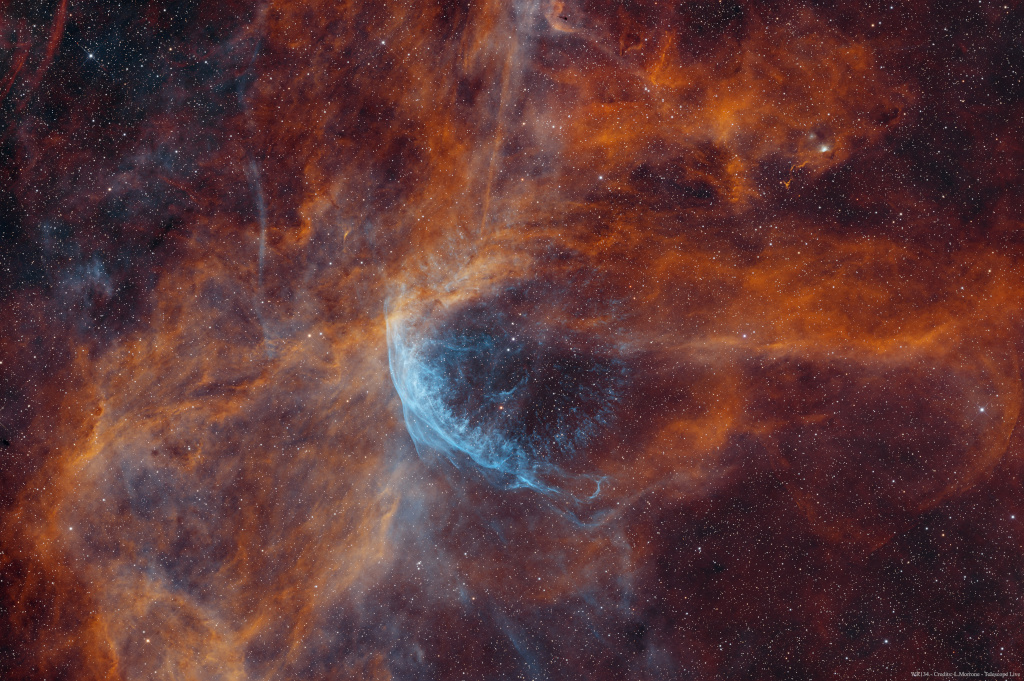
Astronomers have captured a breathtaking image of a vast cosmic bubble, created by the powerful winds of a massive star named WR 134. This stunning ring-like nebula, over 100 light-years wide, showcases the dramatic life of a star on the brink of a spectacular supernova.
Cosmic Bubble: A Giant Star's Last Hurrah Shapes Space

Disclosure: This post contains affiliate links. As an Amazon Associate, I earn from qualifying purchases.

The Full Story

Imagine staring into the heart of a cosmic wonderland! Astronomers have captured a spectacular image that spans an area of space more than twice the size of our own full Moon in the night sky, nestled within the graceful constellation Cygnus. At the center of this breathtaking scene is WR 134, a superstar that’s currently blowing a colossal bubble, creating a glowing ring-like nebula. This vibrant celestial artwork is about 6,000 light-years away from Earth, and the entire structure captured in this telescopic view stretches an astonishing 100 light-years across – that's truly immense! What makes WR 134 so special? It's a rare and incredibly powerful "Wolf-Rayet" star, a true heavyweight of the cosmos. These aren't your average stars; they are extraordinarily massive and burn through their nuclear fuel at an astonishing rate, essentially living fast and dying young. As they reach the final stages of their lives, they shed their outer layers in unbelievably powerful stellar winds, like a cosmic hairdryer constantly blasting material into space. It's these intense winds that sculpt the surrounding interstellar gas and dust into the glowing features we see. The image highlights the bright edges of a ring-like nebula, which is essentially a giant shell of gas being pushed outward by WR 134's mighty breath. This gas, primarily hydrogen and oxygen, gets energized by the star’s radiation, causing it to glow with vibrant colors – a stunning cosmic light show powered by a dying star. But why does this cosmic bubble matter? Stars like WR 134 play a critical role in the universe's grand cycle of creation and destruction. As they violently shed their outer envelopes, and eventually explode in spectacular supernovae, they enrich the surrounding space with "heavy elements." These aren't just any elements; we're talking about carbon, oxygen, iron – the very building blocks for future generations of stars, planets, and yes, even life itself. Without these cosmic factories, the universe would be a much emptier place. So, while WR 134 is nearing its dramatic end, its powerful actions are seeding the universe for new beginnings. The material it disperses will eventually become part of new interstellar clouds, which will then collapse to form brand new stars and planetary systems. In essence, this image captures a pivotal moment in the ongoing story of cosmic recycling, reminding us that even the demise of a star can be a fertile ground for future cosmic wonders.

Key Takeaways

  • 1 A massive, powerful star named WR 134 is creating a vast, glowing bubble in space.
  • 2 These 'Wolf-Rayet' stars are rare, extremely energetic, and are nearing the dramatic end of their lives.
  • 3 Their powerful winds enrich the universe with essential elements vital for new stars, planets, and even life itself.
National Geographic Planisphere Star Finder

National Geographic Planisphere Star Finder

Essential tool for identifying constellations and stars. Perfect for beginners learning the night sky.

Check Price on Amazon
*As an Amazon Associate, we earn from qualifying purchases.

πŸ’‘ Think of it this way:

Think of it like a giant, super-hot hairdryer blowing a huge, glowing bubble in space, constantly expanding as the star sheds its outer layers.

How We Know This

Astronomers used specialized filters on powerful telescopes to capture the faint glow of specific gases, like hydrogen and oxygen, that make up this stunning nebula. These 'narrowband' filters act like colored glasses, allowing scientists to cut through general light and highlight the intricate, glowing structures created by the star's powerful winds, revealing details that would otherwise be invisible.

What This Means

By studying stars like WR 134, scientists gain crucial insights into the life cycles of the universe's most massive stars, how they enrich the cosmos with essential elements, and how future generations of stars and planets will form. This helps us piece together the grand story of cosmic evolution and our remarkable place within it.

Why It Matters

This image isn't just beautiful; it shows us how new stars, planets, and even the elements vital for life are forged. These giant stars act like cosmic factories, spreading the essential ingredients for everything we see around us throughout the universe.

Related Topics

#Wolf-Rayet Star #Nebula #Stellar Evolution #Supernova #Cosmic Elements