Cosmic Collision Creates Gigantic X-ray Spiral in Distant Galaxy Cluster
In Brief
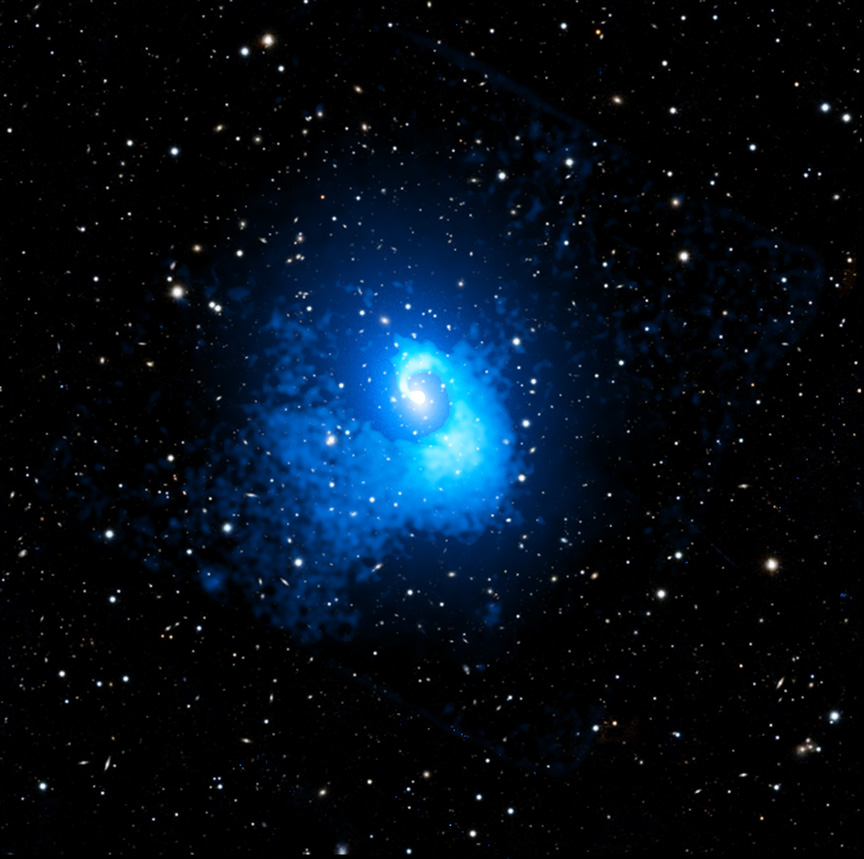
Astronomers recently spotted a colossal spiral of superheated gas, twenty times larger than our Milky Way, within the distant Abell 2029 galaxy cluster. This immense structure was forged billions of years ago when the cluster collided with a smaller one, causing its vast reservoir of gas to slosh and swirl like liquid in a shaken glass.
The Full Story
Key Takeaways
- 1 A colossal X-ray spiral, 20 times larger than the Milky Way, was discovered in the Abell 2029 galaxy cluster.
- 2 Galaxy clusters are the largest gravity-bound structures in the universe, containing thousands of galaxies, hot gas, and vast amounts of dark matter.
- 3 The spiral was formed approximately four billion years ago by a collision between Abell 2029 and a smaller galaxy cluster.
- 4 This cosmic impact caused the cluster's superheated gas to 'slosh' and swirl, shaping it into the observed spiral structure.
- 5 The discovery, made with NASA's Chandra X-ray Observatory, provides key insights into the dynamic evolution of galaxy clusters.
💡 Think of it this way:
Imagine a giant wine glass filled with liquid, then gently shaken – that's how the gas in this galaxy cluster sloshed and swirled after a colossal impact, shaping it into a beautiful spiral.
How We Know This
The secret to uncovering this cosmic drama lies with NASA's Chandra X-ray Observatory. While our eyes see visible light, Chandra is designed to detect X-rays, which are emitted by incredibly hot gas – gas heated to tens of millions of degrees, exactly like the material forming this giant spiral. By analyzing these X-ray signals, astronomers could effectively "see" the superheated gas and reconstruct the ancient collision that shaped it.
What This Means
This discovery is more than just a pretty picture; it's a vital piece of the puzzle for understanding how the largest structures in our universe grow and change. It helps scientists refine their computer simulations of galaxy cluster formation and offers unique insights into how the invisible dark matter influences these cosmic dance-offs. Future observations of other clusters could reveal more of these dramatic, collision-formed features, furthering our understanding of the universe's epic history.
Why It Matters
This discovery gives us a rare glimpse into the dramatic, shaping forces of the universe, helping scientists understand how gargantuan structures like galaxy clusters form and evolve over billions of years through cosmic smash-ups.