The Angel Nebula: A Cosmic Masterpiece of Star Birth
In Brief
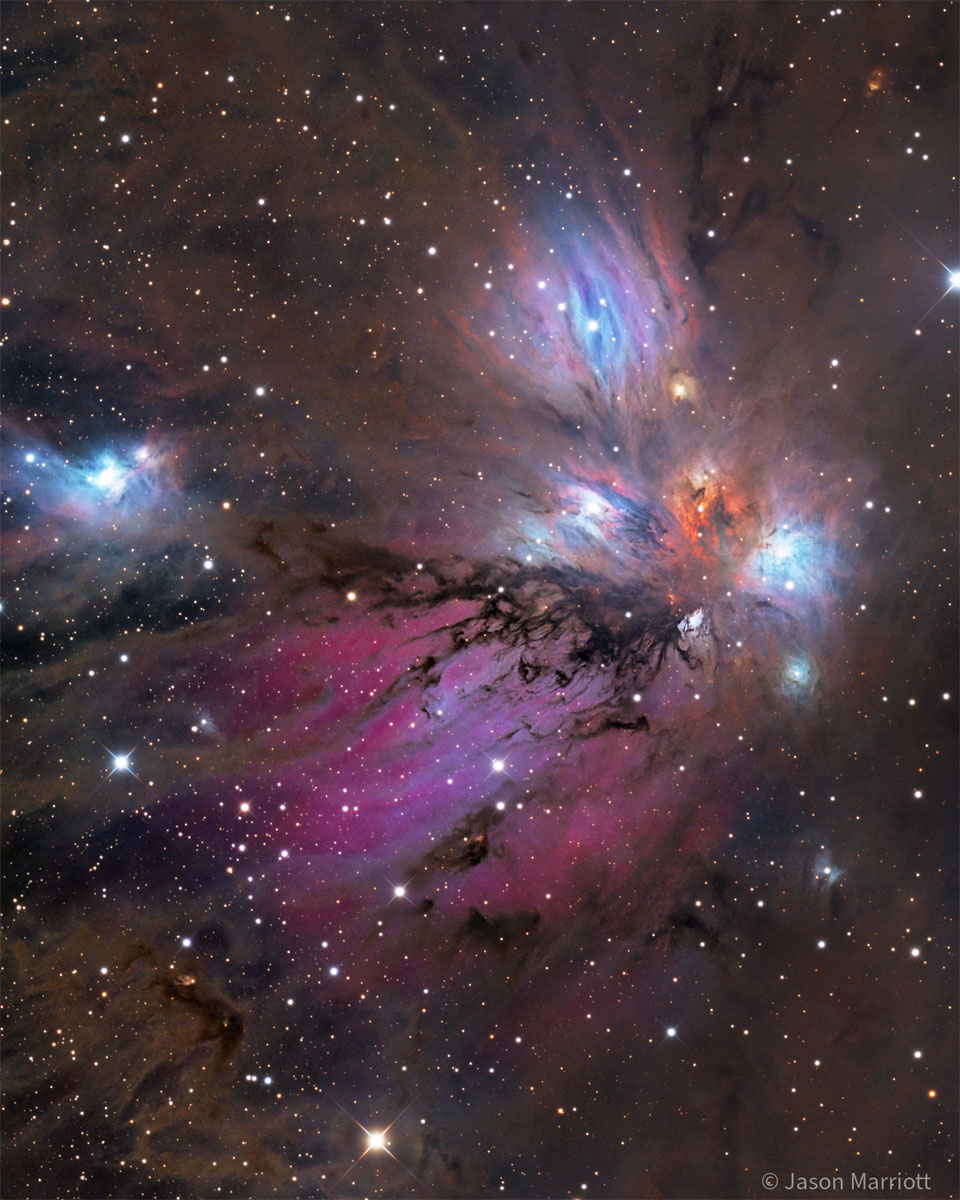
Gaze upon NGC 2170, nicknamed the Angel Nebula, a breathtaking cosmic painting where gas and dust clouds reflect starlight. This vibrant scene is a stellar nursery, bustling with the creation of new stars in a nearby galactic neighborhood.
The Full Story
Key Takeaways
- 1 The Angel Nebula (NGC 2170) is a reflection nebula that glows by reflecting light from nearby stars.
- 2 The image showcases different types of nebulae: bluish reflection, red emission, and dark absorption nebulae.
- 3 This vibrant region is part of Mon R2, a massive star-forming molecular cloud located about 2,400 light-years away in the constellation Monoceros.
💡 Think of it this way:
Imagine a giant, colorful art studio in space, where clouds of cosmic dust and gas are sculpted by the light of newborn stars, creating a celestial masterpiece.
How We Know This
This stunning image was likely captured by powerful telescopes, either on Earth or in space. Astronomers use specialized cameras and filters to gather light across different wavelengths, which helps reveal the varied colors and intricate structures of the nebulae. These observations allow scientists to study the composition of cosmic gas and dust, and the lifecycle of stars within these distant nurseries.
What This Means
By studying star-forming regions like the Angel Nebula, scientists gain crucial insights into how stars, planets, and even entire galaxies evolve. This knowledge helps us understand our place in the universe and provides clues about where new solar systems might be forming, potentially leading to future discoveries of exoplanets and habitable worlds.
Why It Matters
Understanding these majestic stellar nurseries helps us unravel the mysteries of how stars, planets, and even our own solar system came to be, offering crucial clues about our cosmic origins.