Back to Articles Image Of The Day

Cosmic Collision: Galaxies Unraveling in a Galactic Tug-of-War

📖 3 min read 📊 beginner 🏷️ NASA APOD

In Brief

Two magnificent galaxies, NGC 3169 and NGC 3166, are locked in a slow, gravitational dance, pulling each other's stellar material into dramatic streamers. This cosmic interaction is a preview of an eventual merger, a common fate for galaxies across the universe. It offers a stunning glimpse into how galaxies evolve and grow over billions of years.
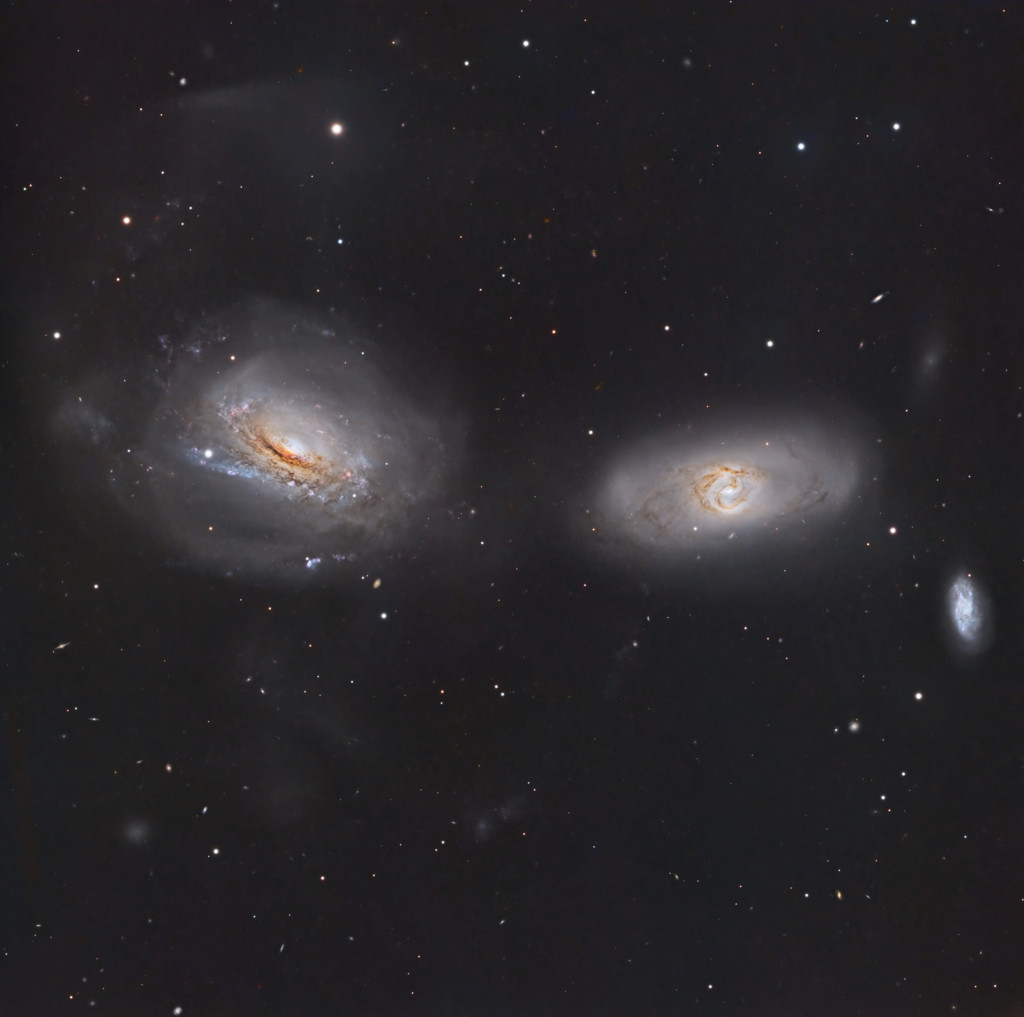
Cosmic Collision: Galaxies Unraveling in a Galactic Tug-of-War

Disclosure: This post contains affiliate links. As an Amazon Associate, I earn from qualifying purchases.

The Full Story

Imagine two cosmic dancers caught in an intricate embrace, slowly pulling at each other's glittering attire. That's essentially what we're witnessing with NGC 3169, a magnificent spiral galaxy currently locked in a gravitational tug-of-war with its neighbor, NGC 3166. Located about 70 million light-years away, toward the faint constellation Sextans, this stunning telescopic image reveals NGC 3169 literally 'unraveling.' Its once neatly wound spiral arms are now stretched into dramatic, sweeping tidal tails and faint stellar arcs, clear evidence of a powerful cosmic interaction unfolding before our eyes. This unraveling isn't a violent crash, but rather a slow, relentless gravitational ballet. The immense gravitational pull between NGC 3169 and NGC 3166 is gradually tugging at each galaxy, drawing out streams of stars, gas, and dust. Think of it like a giant cosmic taffy pull. Over millions of years, these interactions deform the galaxies, creating the beautiful, delicate plumes and arcs we observe. This process is a common precursor to an even more dramatic event: a galaxy merger, where the two colossal structures will eventually combine to form one larger galaxy. While these images might seem unique, such galactic interactions and mergers are surprisingly common across the universe. They are a fundamental part of how galaxies evolve, grow, and build themselves up over cosmic time. Even our own Milky Way galaxy isn't immune; we are currently on a collision course with our galactic neighbor, Andromeda, with a spectacular merger predicted to occur billions of years from now. Studying these distant galactic dances helps astronomers understand the future fate of our own stellar home. Adding another layer of intrigue to NGC 3169 is the powerful engine at its heart. This galaxy is known to host an 'active galactic nucleus' (AGN), a super-bright central region fueled by a ravenous supermassive black hole. This black hole, millions of times the mass of our Sun, is actively accreting gas and dust from its surroundings. As this material spirals inward, it heats up to extreme temperatures, emitting vast amounts of energy that cause the galaxy's core to shine brightly across the entire electromagnetic spectrum, from radio waves to powerful X-rays. Observing these interacting galaxies provides a crucial window into the dynamic processes that shape the cosmos. These gravitational encounters don't just rearrange stars; they can also trigger bursts of new star formation as gas clouds collide and condense. They also play a role in feeding supermassive black holes and influencing the overall structure of galaxy clusters. By studying 'cosmic traffic accidents' like the NGC 3169 group, scientists gain vital insights into the life cycle of galaxies, helping us piece together the grand evolutionary story of the universe.

Key Takeaways

  • 1 Spiral galaxy NGC 3169 is actively interacting with its neighbor NGC 3166, causing its arms to stretch into long tidal tails due to strong gravitational forces.
  • 2 This cosmic dance is a common prelude to a galactic merger, a fundamental process in the universe that sees two galaxies eventually combine into one larger structure.
  • 3 NGC 3169 hosts a powerful active galactic nucleus (AGN) at its core, powered by a supermassive black hole that shines across the entire electromagnetic spectrum.
Hubble Space Telescope Deep Field Poster

Hubble Space Telescope Deep Field Poster

Stunning poster featuring iconic Hubble Space Telescope imagery. Perfect for space enthusiasts.

Check Price on Amazon
*As an Amazon Associate, we earn from qualifying purchases.

💡 Think of it this way:

Imagine two balls of cosmic yarn slowly pulling at each other, unraveling strands into long, flowing tails before eventually becoming one tangled, grander ball. That's similar to what's happening as these galaxies interact and prepare to merge.

How We Know This

Astronomers use powerful telescopes to capture detailed images of distant galaxies, gathering light that has traveled for millions of years. By observing the distinct shapes, stretched features, and the colors of the stars and gas, they can infer the gravitational interactions at play. They also analyze the light across different wavelengths (like radio to X-rays) to detect the presence of energetic phenomena, such as active black holes at a galaxy's center.

What This Means

Studying interacting galaxies like NGC 3169 helps scientists understand the grand tapestry of cosmic evolution. It provides critical data on how galaxies grow, how stars are formed during collisions, and how supermassive black holes at galactic centers are fed and influence their surroundings. These observations also offer invaluable insights into the future fate of our own galaxy, the Milky Way, as it hurtles towards a predicted merger with the Andromeda galaxy billions of years from now, giving us a clearer picture of what to expect.

Why It Matters

This discovery matters because it helps us understand the fundamental processes that shape galaxies, including our own Milky Way. By observing these distant cosmic interactions, scientists gain clues about how galaxies grow, form new stars, and eventually merge, giving us insight into our own galaxy's future.

Related Topics

#Galaxy Interaction #Galactic Merger #Supermassive Black Hole #Cosmic Evolution #Astronomy