Unpacking NGC 1300: A Galaxy with a Spiral Heart and Black Hole Core
In Brief
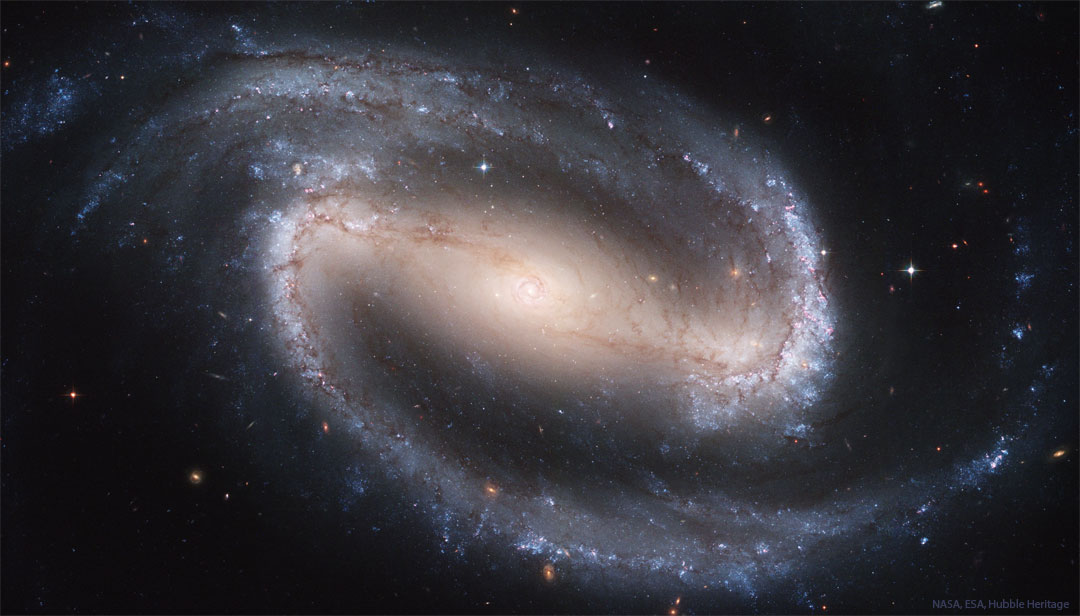
Astronomers have gazed upon the magnificent NGC 1300, a barred spiral galaxy 70 million light-years away. It reveals a stunning cosmic 'nesting doll' structure: a large bar across its center, a smaller spiral galaxy nestled within that bar, and a supermassive black hole at the very heart of it all.
The Full Story
Key Takeaways
- 1 NGC 1300 is a barred spiral galaxy 70 million light-years away.
- 2 It contains a unique 'galaxy within a galaxy' structure: a smaller spiral inside its central bar.
- 3 A supermassive black hole resides at the very core of the inner spiral.
- 4 This structure helps astronomers understand galaxy formation and evolution.
- 5 Our own Milky Way is also a barred spiral galaxy.
💡 Think of it this way:
Imagine a set of Russian nesting dolls, but instead of dolls, each layer is a different cosmic structure. First, you have the grand, outer barred spiral galaxy. Open it up, and inside its central 'bar' is another, smaller spiral. Open that up, and at the very core, you find the tiny, yet incredibly powerful, supermassive black hole.
How We Know This
Astronomers used powerful telescopes, such as the Hubble Space Telescope, to observe and capture the light emitted from NGC 1300. By analyzing this light, which traveled for 70 million years to reach us, they could discern the galaxy's intricate structural details, from its large bar to the smaller inner spiral and the inferred presence of its central supermassive black hole.
What This Means
The detailed study of NGC 1300’s unique nested structure offers a critical window into the mechanisms driving galaxy evolution. It provides observational data to test theories about how galactic bars influence gas flow and star formation, and how supermassive black holes interact with their host galaxies. This will help refine our understanding of how our own Milky Way, a barred spiral itself, likely formed and continues to evolve, and inform future searches for similar complex structures in other distant galaxies.
Why It Matters
Understanding galaxies like NGC 1300 helps us piece together the puzzle of how galaxies, including our own Milky Way, form and evolve. It gives us a clearer picture of our cosmic neighborhood and the incredible structures that make up the universe.