Back to Articles Image Of The Day

Orion's New Visitor: Comet PanSTARRS Dazzles Among the Stars

πŸ“– 3 min read πŸ“Š beginner 🏷️ NASA APOD

In Brief

Comet R3 PanSTARRS recently treated skygazers to a spectacular show as it journeyed through the iconic constellation of Orion, the Hunter. Its magnificent tail was at its most visible, offering a rare and breathtaking celestial encounter. Captured in a stunning long-exposure photograph from New Zealand, the comet briefly shone alongside famous cosmic landmarks before continuing its journey and gradually fading.
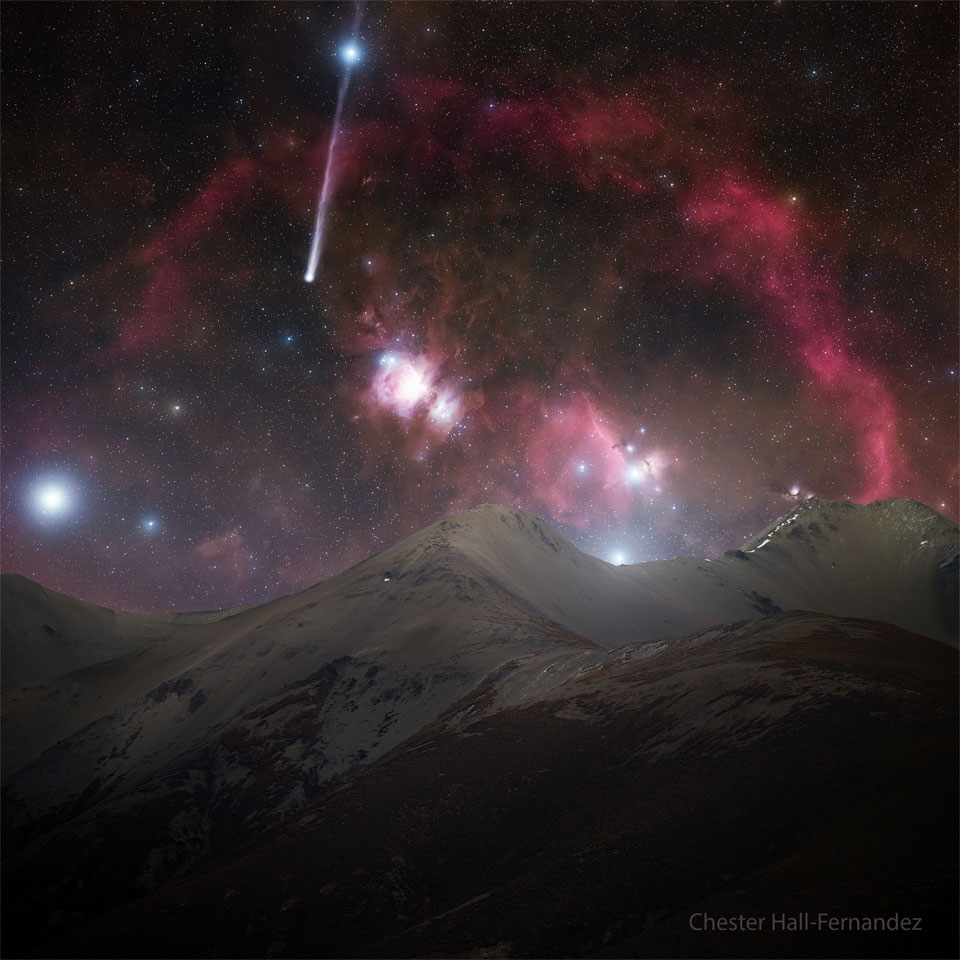
Orion's New Visitor: Comet PanSTARRS Dazzles Among the Stars

Disclosure: This post contains affiliate links. As an Amazon Associate, I earn from qualifying purchases.

The Full Story

Imagine a fleeting cosmic guest making a grand entrance on one of the most famous stages in the night sky. That's exactly what Comet C/2025 R3 (PanSTARRS) did recently, dazzling observers as it journeyed through the iconic constellation of Orion, the Hunter. For a brief, spectacular period, PanSTARRS became what astronomers are calling an 'Orion Comet,' showcasing its magnificent tail in one of the most recognizable starry backdrops. While Orion is a familiar sight to many, having a bright comet pass directly in front of it is a truly rare event. It’s like a celestial dance partner stepping into the spotlight. Historical records show that only a handful of other brilliant comets have made similar dramatic appearances in Orion, including Comet Lovejoy in 2015, the famous Hale-Bopp in 1997, and even the 'Great Comet' of 1264. This exclusive club highlights just how special PanSTARRS' recent visit was, offering a unique photographic opportunity and a memorable sight for skygazers. A breathtaking image, captured from the rugged Craigieburn Mountain Range in New Zealand, perfectly illustrates this cosmic rendezvous. Taken with a long-duration exposure – a technique where the camera's shutter stays open for an extended period to gather faint light – the photo beautifully reveals the comet's ghostly tail streaming across the frame. Look closely, and you can spot some of Orion's most famous residents: the glowing Orion Nebula, the sweeping arc of Barnard's Loop, and even the bright star Saiph, visible *through* the comet's translucent tail, like light shining through a cosmic veil. Comets are often described as 'dirty snowballs' – icy wanderers from the distant reaches of our solar system. As they approach the Sun, the ice heats up, turning directly into gas and dragging dust particles along, forming the spectacular glowing tail we see. The tail of Comet R3 PanSTARRS was particularly visible during its pass through Orion because of its trajectory and composition, making it a prime candidate for these stunning observations. It's a clear sign of the comet's activity, stirred by the Sun's warmth, creating a temporary celestial banner. However, like all good cosmic shows, this one is drawing to a close. As Comet R3 PanSTARRS continues its journey, moving further south and soon passing into the neighboring constellation of Monoceros, the Unicorn, its brilliant tail is beginning to fade. This fading is a natural part of a comet's lifecycle as it moves away from the Sun and its icy core becomes less active. While its brightest performance is over, the memory of Comet R3 PanSTARRS as an 'Orion Comet' will remain a highlight in astronomical observations for years to come.

Key Takeaways

  • 1 Comet R3 PanSTARRS recently made a spectacular and rare appearance in the iconic constellation of Orion.
  • 2 Its shimmering tail was at its most visible during this celestial crossing, earning it the title 'Orion Comet'.
  • 3 A stunning long-exposure photograph from New Zealand captured the comet alongside the Orion Nebula, Barnard's Loop, and the star Saiph visible through its tail.
  • 4 Only a handful of other bright comets, like Hale-Bopp, have made similar dramatic appearances in Orion historically.
  • 5 The comet is now fading as it moves further from the Sun and travels into the constellation Monoceros.
National Geographic Planisphere Star Finder

National Geographic Planisphere Star Finder

Essential tool for identifying constellations and stars. Perfect for beginners learning the night sky.

Check Price on Amazon
*As an Amazon Associate, we earn from qualifying purchases.

πŸ’‘ Think of it this way:

Imagine a celebrity visitor making a grand entrance onto the most famous stage in the world – that's what Comet PanSTARRS did in the cosmic theater of Orion, putting on a dazzling, fleeting performance.

How We Know This

The discovery and observation of Comet R3 PanSTARRS were made through careful astrophotography and visual observation. The featured image, for instance, used 'long-duration exposure' – a technique where a camera's shutter remains open for an extended period. This allows the camera sensor to collect significantly more light from faint objects like distant comets and nebulae than the human eye can in a glance, revealing details and colors invisible in short exposures.

What This Means

Observing comets like PanSTARRS helps scientists study the primordial material from which our solar system formed, providing clues about its early history and composition. For the general public, such events inspire curiosity about space and highlight the dynamic, ever-changing nature of our cosmic neighborhood. It encourages stargazing and fosters a deeper appreciation for the wonders beyond Earth.

Why It Matters

This event offers a fantastic opportunity for everyone to connect with the dynamic beauty of our universe. Witnessing a bright comet against a familiar constellation is a rare spectacle, inspiring wonder and reminding us of the ever-changing nature of our solar system. It's a shared human experience, much like generations before us who gazed in awe at similar celestial visitors.

Related Topics

#Comet #PanSTARRS #Orion #Astrophotography #Celestial Event