Back to Articles Image Of The Day

Ancient Comet PanSTARRS Bids Farewell Beside a Dazzling Star Nursery

📖 3 min read 📊 beginner 🏷️ NASA APOD

In Brief

A stunning new image captures Comet R3 PanSTARRS, a relic from the early Solar System, glowing blue as it passes by the vibrant Orion Nebula, a nearby stellar nursery. This rare cosmic encounter shows an ancient traveler saying goodbye to our solar neighborhood, framed against a backdrop of new stars being born.
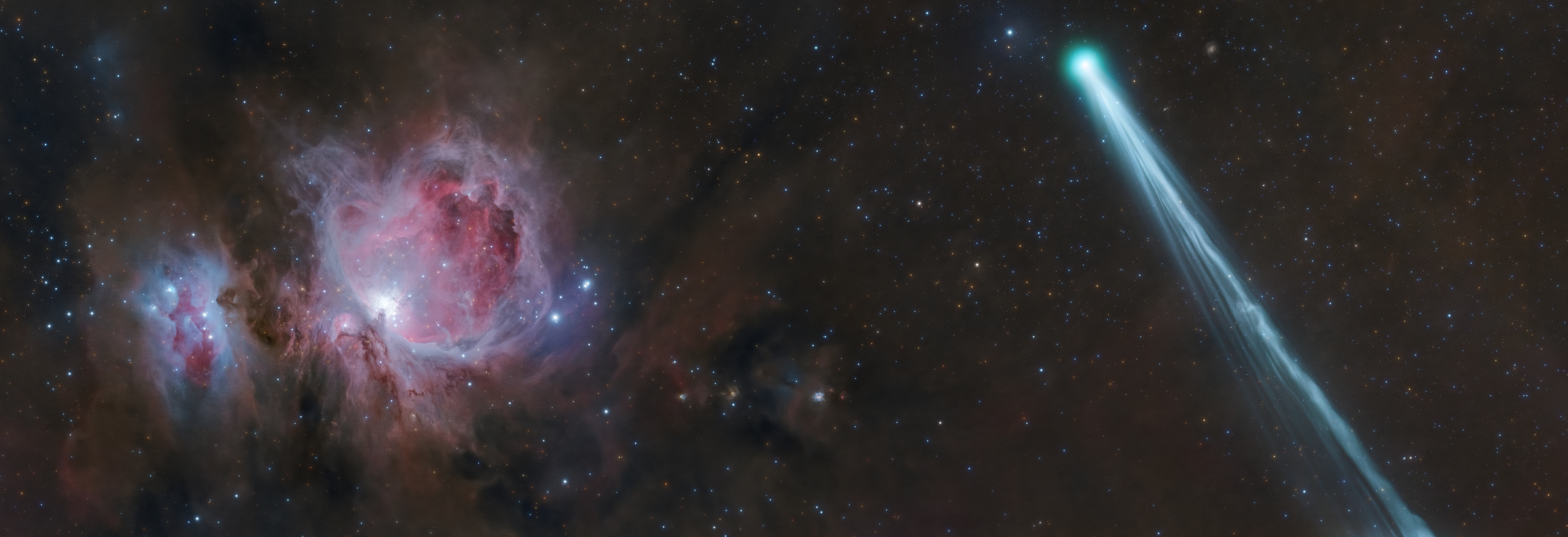
Ancient Comet PanSTARRS Bids Farewell Beside a Dazzling Star Nursery

Disclosure: This post contains affiliate links. As an Amazon Associate, I earn from qualifying purchases.

The Full Story

A breathtaking new composite image from NASA showcases a truly unique cosmic conjunction: the ancient wanderer Comet R3 PanSTARRS making a grand exit from our Solar System, framed against the glorious backdrop of the Orion Nebula, our closest stellar nursery. This isn't just a pretty picture; it's a profound visual narrative of 'something old' meeting 'something new' in the vast expanse of space. Comet R3 PanSTARRS, visible as a vibrant blue streak in the image, is far more than just a passing light show. Scientists believe it originated billions of years ago in the Oort Cloud, a distant, icy shell surrounding our Solar System, making it a true relic from the very beginnings of our planetary neighborhood. Its striking blue tail forms as gas escaping the comet's icy core is energized and ionized by sunlight – a beautiful, energetic process that lights up its path as it journeys onward, now about 127.5 million kilometers from Earth. Astronomers are incredibly excited about comets for many reasons. Think of them as cosmic time capsules: their pristine compositions offer an untouched record of the original building blocks that formed our planets, including Earth. Some theories even suggest that comets might have delivered vital ingredients, like water, to a young Earth, paving the way for life. Plus, studying their behavior and tails provides crucial insights into the solar wind and radiation interactions in space. In stark contrast to the ancient comet, the background of this composite image features the magnificent Orion Nebula, also known as M42. Located just beyond our solar neighborhood, the Orion Nebula is a bustling 'stellar nursery' – a massive cloud of gas and dust where new stars are actively being born. At a relatively youthful age of about 2 million years, it represents the 'something new' in this cosmic pairing, a vibrant reminder that the universe is constantly evolving and creating. This incredible image, capturing two vastly different cosmic phenomena, offers us a moment to reflect on the immense timelines and processes at play in the universe. It's a snapshot of a fleeting moment: an ancient traveler, laden with secrets from the dawn of time, bidding farewell as it passes by a bustling hub of future stars, reminding us of both our cosmic past and the promise of what's yet to come.

Key Takeaways

  • 1 Comet R3 PanSTARRS is an ancient relic from the early Solar System, now leaving our neighborhood.
  • 2 Comets are crucial 'time capsules' containing clues about planetary formation and potentially delivered water to early Earth.
  • 3 The Orion Nebula is our nearest and most active stellar nursery, showcasing where new stars are actively being born.
Hubble Space Telescope Deep Field Poster

Hubble Space Telescope Deep Field Poster

Stunning poster featuring iconic Hubble Space Telescope imagery. Perfect for space enthusiasts.

Check Price on Amazon
*As an Amazon Associate, we earn from qualifying purchases.

💡 Think of it this way:

Imagine finding an ancient message in a bottle floating next to a brand new factory – that's a bit like seeing this old comet pass by a bustling star-forming region.

How We Know This

This amazing image is actually a cosmic 'photobomb' that required a bit of photographic artistry! Astronomers first captured the wide, intricate glow of the Orion Nebula over two separate nights of observation. Then, on a third night, they specifically photographed the fast-moving Comet R3 PanSTARRS as it streaked by. These different shots were then digitally combined and stitched together to create the final, breathtaking composite view, allowing us to see these two distant objects in one frame.

What This Means

While Comet R3 PanSTARRS is leaving us for now, it's expected to make a return visit in 2026, offering another chance for astronomers to study this ancient wanderer and its secrets. Continued observations of comets and nebulae like Orion help us piece together the grand story of our universe, from the initial ingredients of planets to the ongoing birth of stars. Each glimpse deepens our understanding of our cosmic home and its potential future, reminding us of the dynamic and ever-changing cosmos.

Why It Matters

This celestial pairing offers a glimpse into both the deep past of our Solar System and the ongoing birth of new stars. Comets like PanSTARRS are like cosmic archaeologists, holding clues to how planets formed and even how water might have arrived on Earth, making this a profound look at our origins.

Related Topics

#Comet R3 PanSTARRS #Orion Nebula #Star Formation #Solar System #Astronomy