Apollo's 3D View: The Moon's Mysterious Elongated Craters Revealed
In Brief
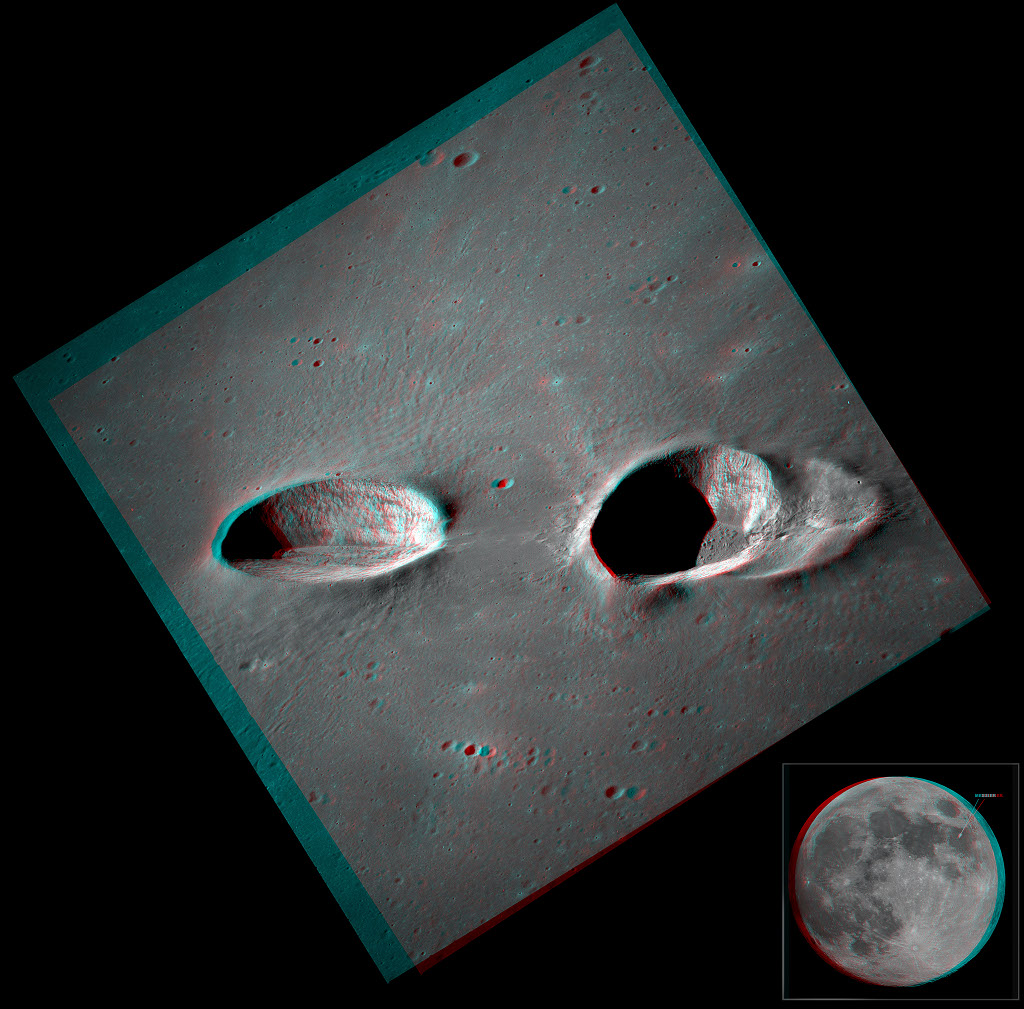
NASA scientists have created a stunning 3D view of two unique craters on the Moon, named Messier and Messier A. These aren't your typical round lunar pits; their elongated shapes tell the dramatic story of an ancient asteroid that essentially 'skipped' across the lunar surface. This fresh perspective from Apollo 11 data offers new insights into how powerful impacts shape our celestial neighbor.
The Full Story
Key Takeaways
- 1 The Messier craters on the Moon are uniquely elongated, unlike most circular impact craters.
- 2 Their unusual shape is attributed to an extremely shallow-angle impact, similar to a stone skipping across water.
- 3 A new 3D (stereo) image, created from historic Apollo 11 photographs, provides a detailed view of their unique formation.
- 4 This discovery helps scientists better understand rare impact events and how they shape planetary surfaces.
- 5 It highlights the continued scientific value of revisiting old space mission data with new analytical methods.
💡 Think of it this way:
Imagine skipping a flat stone across a calm lake; instead of making a round splash, it leaves an elongated mark or even bounces twice. That's similar to how the asteroid hit the Moon, creating these uniquely shaped craters.
How We Know This
Scientists used two distinct, high-resolution photographs taken by astronauts during the historic Apollo 11 mission. By scanning these images and digitally combining them with specialized software, they created a 'stereo' or 3D view. When you look at this combined image with red/blue glasses, your brain perceives depth, making the craters pop out and revealing their unique structure more clearly than a flat image ever could.
What This Means
Understanding these rare 'skip shot' impacts helps scientists refine models of how planetary surfaces evolve, not just on the Moon, but across the entire solar system. This knowledge can inform future missions aiming to explore impact sites or even identify potential resources. It also highlights the incredible potential of re-examining vast archives of historical space data with modern tools, proving that old missions can still deliver brand new discoveries.
Why It Matters
This new 3D perspective helps us visualize lunar geology like never before, offering fresh insights into the powerful forces that shaped the Moon and even Earth. It also reminds us how valuable historical mission data, like that from Apollo 11, continues to be for scientific discovery today.