Back to Articles Image Of The Day

Comet PanSTARRS: A Farewell Tour from the Southern Skies

📖 3 min read 📊 beginner 🏷️ NASA APOD

In Brief

Comet R3 PanSTARRS is currently making its final visible appearance as it heads out of our Solar System for good. Best viewed from the Southern Hemisphere after sunset, this icy visitor offers a fleeting spectacle. Don't miss your chance to catch a glimpse before it becomes too distant for cameras to see.
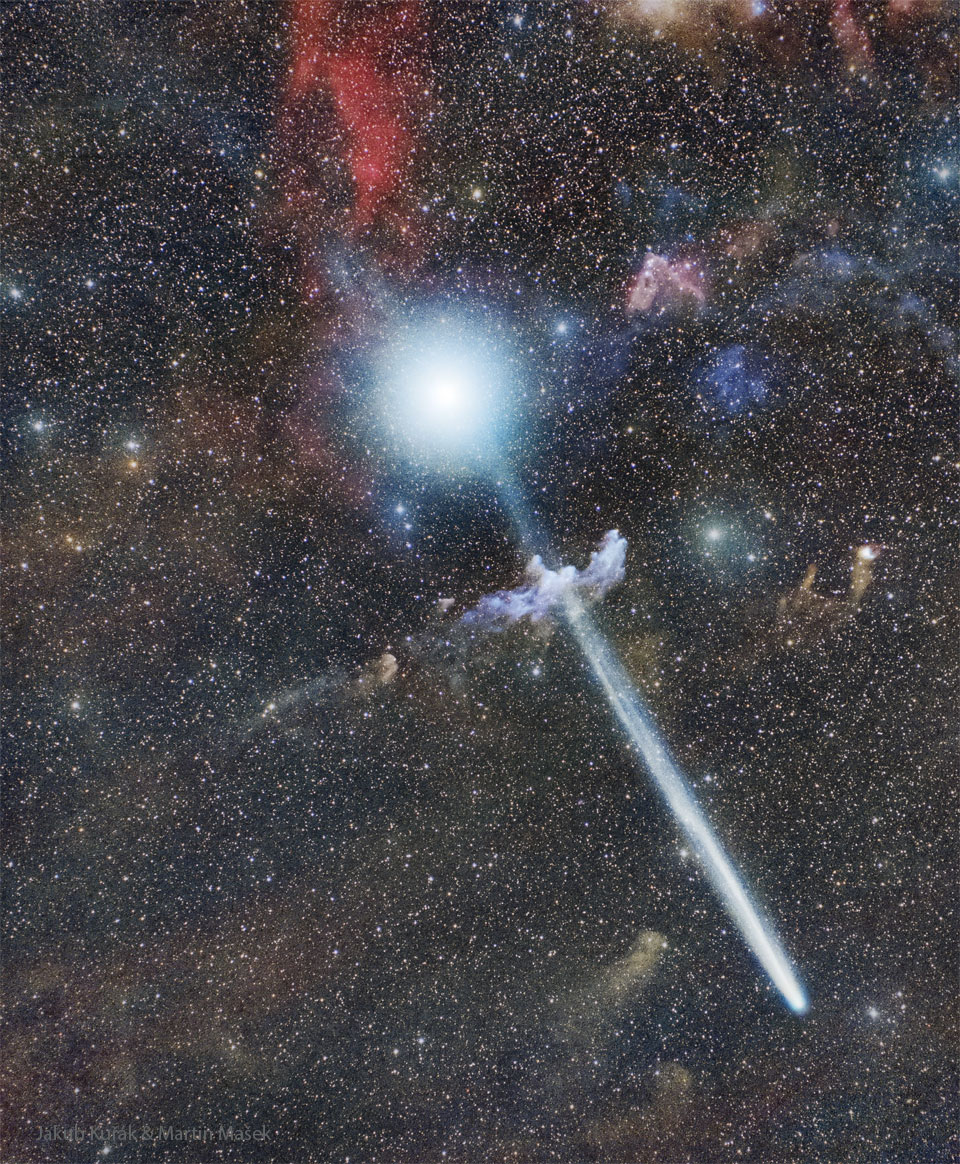
Comet PanSTARRS: A Farewell Tour from the Southern Skies

Disclosure: This post contains affiliate links. As an Amazon Associate, I earn from qualifying purchases.

The Full Story

Our celestial neighborhood is full of travelers, and one such visitor, Comet C/2025 R3 (PanSTARRS), is currently making its grand exit. For those in Earth's Southern Hemisphere, this icy wanderer offers a unique opportunity to bid it farewell. Over the past week, Comet R3 PanSTARRS has moved into southern skies, making it ideally positioned for viewing towards the west shortly after sunset. This is a fleeting chance, as the comet is rapidly receding, soon becoming too faint even for powerful cameras to capture. It's easy to get a bit disoriented when looking at the night sky. While the comet might appear to be near bright stars like Rigel or the ethereal Witch Head Nebula, these are merely distant cosmic signposts in the background. Rigel, a brilliant star in the constellation Orion, and the Witch Head Nebula, a sprawling cloud of gas and dust, are both immensely far away – light-years, in fact – and completely unrelated to the comet's actual path. Think of it like watching a bird fly across your window – it seems to pass by the mountain in the distance, but the bird isn't actually heading *to* the mountain; it's simply much closer to you, just like the comet is to us. From our perspective on Earth, Comet R3 PanSTARRS appears to be slowly drifting towards the upper right of the sky, night by night, and will soon be crossing into the constellation Orion. However, its true journey is far more dramatic: spatially, this comet is now headed *out* of our Solar System entirely. Unlike many comets that loop back around the Sun on long, elliptical paths, PanSTARRS R3 is on a trajectory that will carry it into the vast emptiness of interstellar space, unlikely to ever return for perhaps hundreds of thousands of years, if ever. This incredible journey is why observatories, like the one near Cerro Paranal in Chile where the featured image was captured, are so crucial. Located in the Southern Hemisphere, these facilities benefit from pristine dark skies and their geographical position, allowing them to track such celestial events. While you might not spot it with the naked eye much longer, advanced cameras and telescopes will continue to follow its fading light for about another week, documenting its final moments in our cosmic home before it embarks on its solo voyage through the galaxy.

Key Takeaways

  • 1 Comet PanSTARRS R3 is leaving our Solar System for good.
  • 2 It's currently best visible from Earth's Southern Hemisphere after sunset.
  • 3 The comet's apparent path against background stars is not its true destination.
  • 4 It will only be visible to powerful cameras for about one more week.
National Geographic Planisphere Star Finder

National Geographic Planisphere Star Finder

Essential tool for identifying constellations and stars. Perfect for beginners learning the night sky.

Check Price on Amazon
*As an Amazon Associate, we earn from qualifying purchases.

💡 Think of it this way:

Imagine a special guest who's just visited your town and is now waving goodbye as they drive off into the vast highway, unlikely to return for a very, very long time – or ever.

How We Know This

Scientists track comets like PanSTARRS R3 using powerful telescopes and specialized cameras from observatories around the world. These advanced instruments capture detailed images of the comet's position over time, allowing astronomers to calculate its precise trajectory and predict its future movements. Observing sites with dark, clear skies, like those in Chile, are essential for gathering the light from these distant, fading objects.

What This Means

The departure of Comet PanSTARRS R3 is a reminder of the dynamic and ever-changing nature of our solar system and the cosmos beyond. Studying comets that leave our solar system provides scientists with invaluable data about the composition of icy bodies originating from the outer reaches of our stellar neighborhood, beyond Pluto. This information helps us understand the conditions that existed during the formation of our solar system and the broader context of interstellar space. While this specific comet won't return for a human lifetime, its observation contributes significantly to our ongoing quest to unravel the universe's mysteries.

Why It Matters

Witnessing Comet PanSTARRS depart our solar system is a rare chance to connect with the dynamic universe around us. It's a reminder of the vast journeys of cosmic objects and the transient beauty they offer us, providing clues about the early solar system.

Related Topics

#Comet #PanSTARRS #Astronomy #Solar System #Southern Hemisphere