Planets on the Move: Saturn and Neptune's Cosmic Backward Dance
In Brief
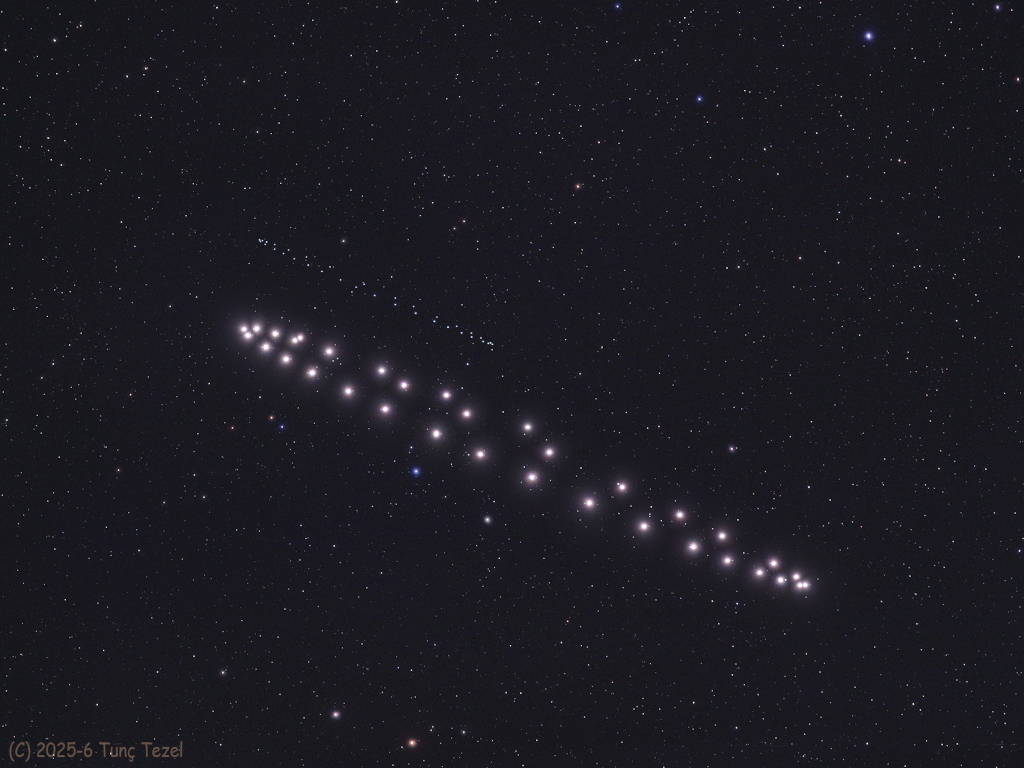
Recently, Saturn and Neptune appeared to perform a celestial 'backward dance' in our night sky, captured in images taken over nine months. This isn't actual backward motion, but a fascinating optical illusion caused by Earth's faster orbit around the Sun.
The Full Story
Key Takeaways
- 1 Retrograde motion is an optical illusion, not actual backward planetary movement.
- 2 It occurs because Earth orbits the Sun faster than outer planets, causing us to 'lap' them.
- 3 Saturn and Neptune recently performed a visible 'backward dance' over several months, a rare celestial alignment.
💡 Think of it this way:
Imagine our Solar System as a giant running track. Earth is a speedy runner on the inside lane, while Saturn and Neptune are slower runners on the outer lanes. As Earth 'laps' the slower planets, they momentarily appear to move backward from our perspective, even though everyone is constantly moving forward.
How We Know This
Astronomers compiled a composite of images taken over 34 nights. By carefully tracking the positions of Saturn and Neptune against the distant background stars over many months, they were able to record and visualize this apparent backward motion.
What This Means
Understanding retrograde motion is fundamental to our grasp of celestial mechanics. It allows astronomers to predict planetary movements with incredible accuracy and serves as a powerful teaching tool to visualize our Solar System's layout. For the public, it offers a tangible connection to the dynamic universe, encouraging skygazing and a deeper appreciation for the cosmic ballet happening above us.
Why It Matters
This phenomenon helps us understand the fundamental mechanics of our Solar System and how our perspective from Earth shapes what we see. It’s a beautiful demonstration of orbital mechanics playing out in our night sky, reminding us of the dynamic universe we live in.