Galaxy Neighbors: A Swirl and a Sphere in the Cosmic River
In Brief
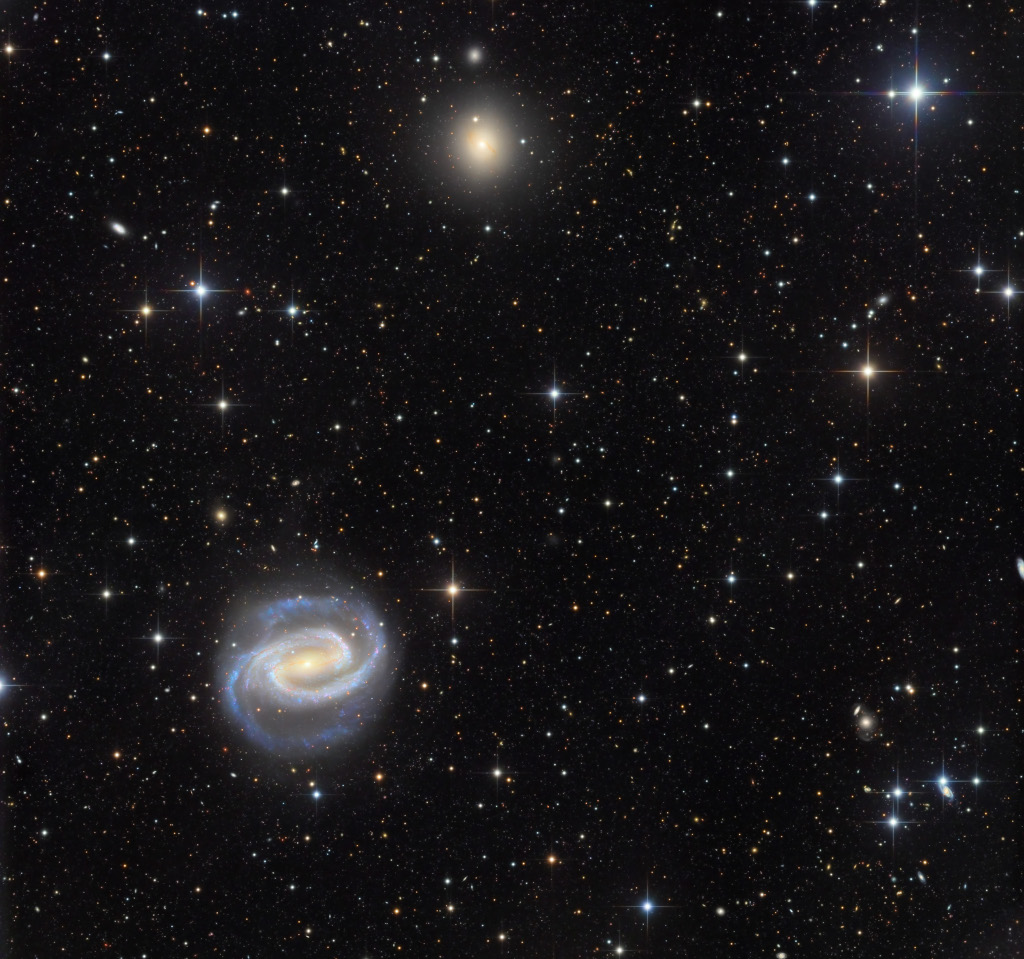
NASA's latest image captures two dramatically different galaxies, a grand spiral and a colossal elliptical, residing together in the distant Eridanus galaxy cluster. This cosmic 'group photo' offers a unique opportunity to study how galaxies evolve and interact across the universe.
The Full Story
Key Takeaways
- 1 Two distinct galaxies, a spiral (NGC 1300) and an elliptical (NGC 1297), are observed together.
- 2 NGC 1300 is a barred spiral, similar to our Milky Way, with active star formation and a central black hole.
- 3 NGC 1297 is an older elliptical galaxy, likely formed from past mergers, with little new star formation.
- 4 Both galaxies are members of the distant Eridanus Galaxy Cluster, over 70 million light-years away.
- 5 Comparing these contrasting galaxies helps astronomers understand how galaxies evolve and interact.
💡 Think of it this way:
Imagine observing two very different cities on the same continent: one a bustling metropolis with vibrant new construction and a clear central hub (the spiral), and the other an ancient, sprawling city, quiet and rich with history but less new development (the elliptical). Both tell a different story about how civilizations develop.
How We Know This
This stunning view was captured through advanced telescopic imaging, likely combining observations from powerful ground-based or space-based telescopes. By taking a 'group photo' of these distant galaxies, astronomers can analyze their structures, stellar populations, and relative positions to learn more about their properties and how they fit into the larger cosmic neighborhood.
What This Means
Studying such diverse galaxies in close proximity offers crucial data for refining our models of galaxy formation and evolution. This research helps us better predict the future interactions and transformations of galaxies, including the eventual merger of our own Milky Way with the Andromeda galaxy, and unravel the long-term structural development of the universe.
Why It Matters
Understanding these distant galaxies helps us piece together the puzzle of cosmic evolution, giving us clues about how our own Milky Way galaxy might have formed and what its future holds.