Galactic Collision Caught in the Furnace Constellation!
In Brief
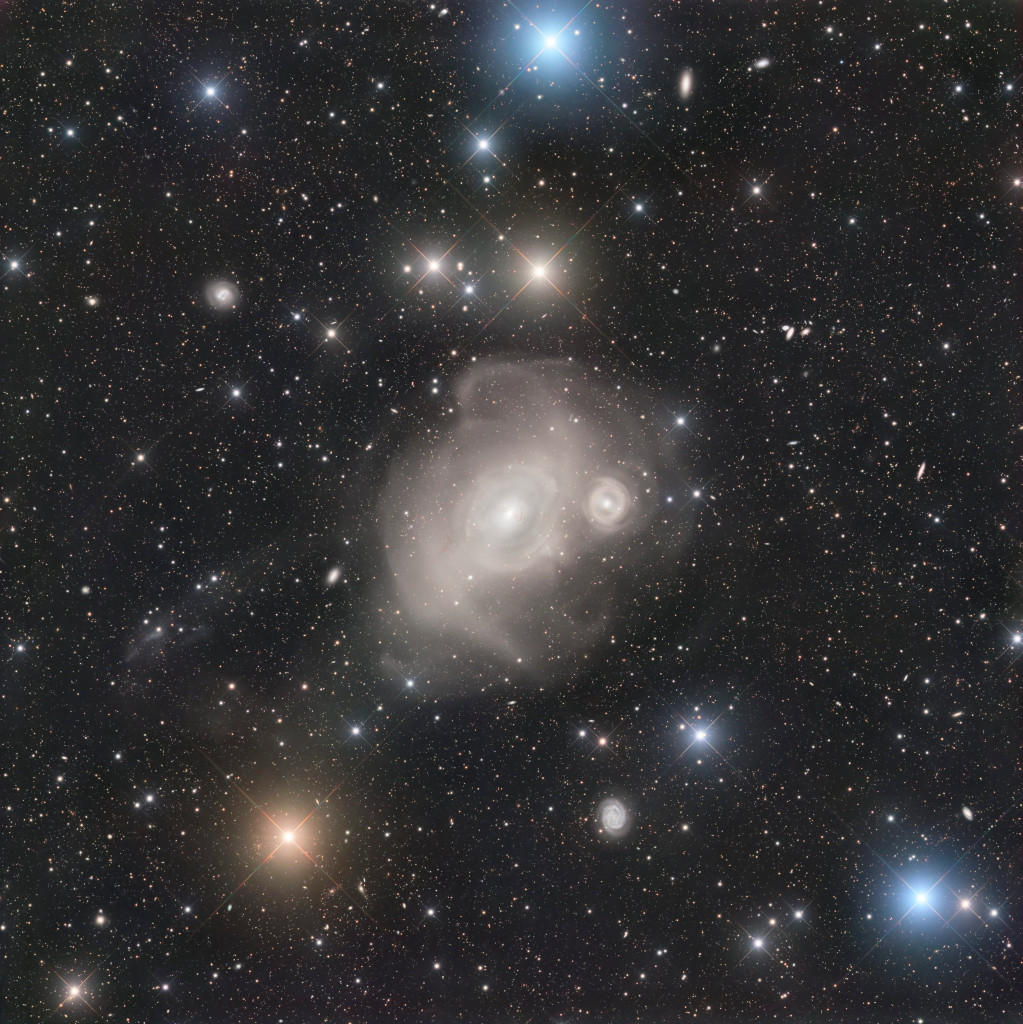
Astronomers have captured a cosmic smash-up involving a giant galaxy, NGC 1316, and its smaller neighbor. This galactic encounter, which happened millions of years ago, has left visible trails of stars and dust, revealing a history of mergers and collisions in the Fornax cluster.
The Full Story
Key Takeaways
- 1 NGC 1316 is colliding with NGC 1317
- 2 NGC 1316 is the result of multiple past mergers
- 3 Galactic collisions shape the evolution of galaxies
💡 Think of it this way:
Imagine two puddles of paint colliding – the colors swirl and mix, creating new patterns and textures. That's similar to what happens when galaxies collide, but on a scale that's almost impossible to comprehend!
How We Know This
This stunning image was captured using powerful telescopes, allowing astronomers to observe the faint light from distant galaxies. By analyzing the structure, shape, and distribution of stars and dust within these galaxies, they can piece together their history and understand how they interact with each other.
What This Means
Studying galactic collisions like this helps us understand how galaxies evolve over billions of years. It provides insights into the processes that shaped our own Milky Way and what might happen to it when it eventually collides with the Andromeda galaxy in the distant future.
Why It Matters
Understanding how galaxies collide and merge helps us learn how our own galaxy, the Milky Way, formed and will evolve in the future. It gives us clues about the universe's past and future!