Back to Articles Image Of The Day

Interstellar Visitor: Comet From Another Star System Spotted!

📖 4 min read 📊 beginner 🏷️ NASA APOD

In Brief

Comet 3I/ATLAS, only the third interstellar object ever observed passing through our solar system, is now heading away from the Sun. Astronomers are using telescopes around the solar system to study this unique visitor from another star.
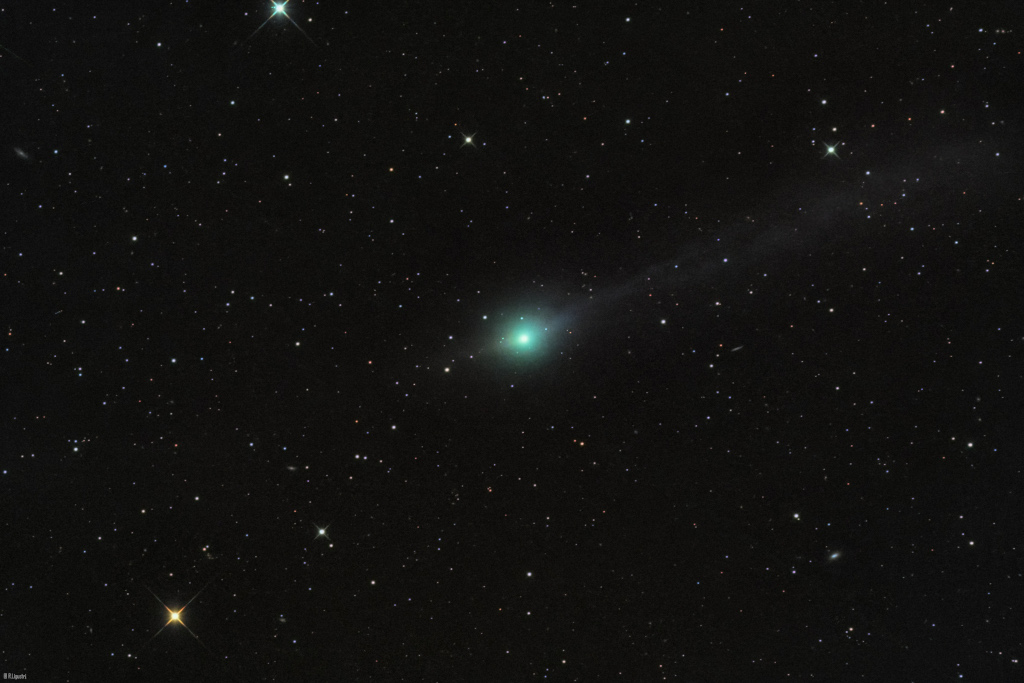
Interstellar Visitor: Comet From Another Star System Spotted!

The Full Story

Comet 3I/ATLAS, a celestial wanderer from beyond our solar system, has recently swung by for a visit. After making its closest approach to the Sun (perihelion) on October 29th, it's now on its outbound journey, heading back into the vastness of interstellar space. This comet, only the third interstellar object ever observed, provides a unique opportunity for astronomers to study material from another star system. Like a cosmic tourist, 3I/ATLAS sports a greenish coma (the cloud of gas and dust surrounding the nucleus) and faint tails, which are visible against the backdrop of stars in the constellation Virgo. While you'd need a telescope to spot it, astronomers are actively observing it using a variety of telescopes, both on Earth and in space. These observations are part of an unprecedented, solar system-wide campaign to gather as much data as possible about this rare visitor. Think of it like this: our solar system is a neighborhood, and most comets are residents. But every now and then, a visitor from another neighborhood comes to call. These interstellar objects are like time capsules, offering us insights into the conditions and materials that exist in other star systems. By studying their composition and behavior, we can learn about the building blocks of planets and the processes that shape them. The comet is currently visible in the morning sky in November and will make its closest approach to Earth around December 19th. However, even at its closest, it will still be a safe distance of about 270 million kilometers away. While that may seem far, it's close enough for astronomers to get a good look and learn as much as possible before 3I/ATLAS disappears back into the interstellar void. Its increasing brightness recently, while needing a telescope to observe from Earth, is contributing to excitement around the data that is being collected across the solar system.

Key Takeaways

  • 1 Comet 3I/ATLAS is an interstellar object, meaning it originated from outside our solar system.
  • 2 It's currently heading away from the Sun after its closest approach in October.
  • 3 Astronomers are using telescopes across the solar system to study it.
National Geographic Planisphere Star Finder

National Geographic Planisphere Star Finder

Essential tool for identifying constellations and stars. Perfect for beginners learning the night sky.

$9.95
View on Amazon
*As an Amazon Associate, we earn from qualifying purchases. Price and availability may vary.

💡 Think of it this way:

Imagine a message in a bottle washing up on your shore – this comet is like that bottle, carrying secrets from a faraway land.

How We Know This

Astronomers are using a variety of telescopes, including those in space and on Earth, to observe the comet. They analyze the light reflected by the comet to determine its composition and track its trajectory to understand its origin and future path. Like studying a car's license plate, the comet's composition and trajectory can tell us where it 'came from'.

What This Means

Studying interstellar objects like 3I/ATLAS helps us understand the diversity of planetary systems in our galaxy and provides clues about the formation and evolution of our own solar system. Future discoveries of interstellar objects could even reveal the existence of life beyond Earth.

Why It Matters

Interstellar objects provide rare clues about the formation of planetary systems around other stars. Studying them helps us understand how common or unique our own solar system is.

Related Topics

#comet #interstellar #astronomy #solar system #3I/ATLAS