Enceladus' Ocean: A Chemical Soup Brewing Life's Ingredients?
In Brief
Saturn's moon Enceladus is shooting out complex organic molecules from its subsurface ocean, hinting at complex chemistry within. These molecules could be building blocks for life, making Enceladus an even more exciting place to search for extraterrestrial life. It's like finding a fully stocked kitchen in a place we thought was barren!
The Full Story
Key Takeaways
- 1 Cassini found complex organic molecules in Enceladus' plumes.
- 2 These molecules suggest active chemistry in its ocean.
- 3 This strengthens the case for Enceladus being habitable.
💡 Think of it this way:
Imagine Enceladus as a giant, icy planet-sized cell. These molecules are like the amino acids and sugars within that cell, potentially combining to form more complex structures, just like they do in living things on Earth.
How We Know This
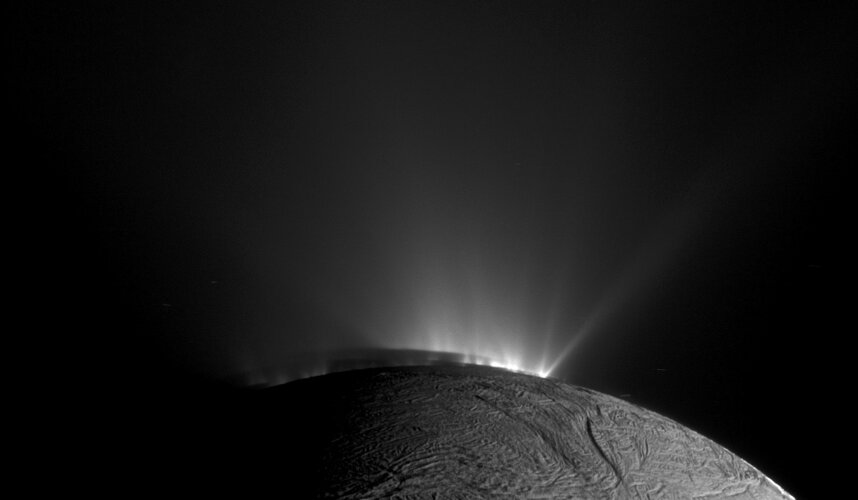
The Cassini spacecraft didn't directly land on Enceladus and scoop up water samples. Instead, it flew through the plumes of icy particles that are constantly erupting from the moon's south pole. Instruments on board Cassini, like mass spectrometers, were able to analyze the composition of these particles by measuring their mass and charge. By analyzing the data, scientists could identify the different types of molecules present in the plumes and infer what chemical processes might be occurring within the ocean below.
What This Means
This discovery will likely fuel further exploration of Enceladus. A dedicated mission to Enceladus could involve a spacecraft equipped to collect and analyze plume samples in greater detail. This mission could search for specific biomarkers, which are molecules that are indicative of life. Finding such biomarkers would be a groundbreaking discovery, revolutionizing our understanding of life in the universe and potentially impacting our own origin story.
Why It Matters
This discovery strengthens the possibility of life existing beyond Earth. It suggests that the necessary ingredients for life may be more common in the universe than we previously thought, making the search for extraterrestrial life even more compelling.